 France
 English
 Deutsch
 Español
 Italiano
 Nederlands
 Polski
 Português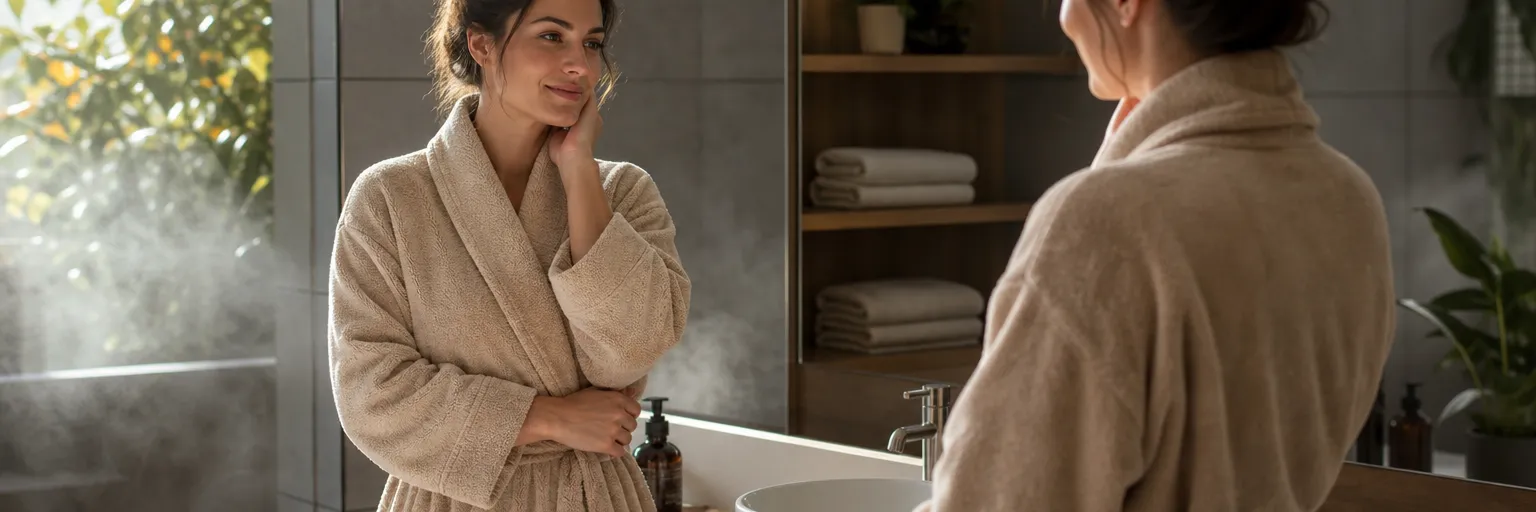
Why does choosing the right bathrobe change everyday comfort?
Choosing the right bathrobe is not just a matter of aesthetics. It is a choice that directly affects well-being after a bath, comfort during moments of relaxation, and even everyday practicality. A model suited to your needs helps regulate warmth more effectively, absorb moisture efficiently, and provide a pleasant feeling on the skin from the very first moments.
On the other hand, a poorly chosen bathrobe can quickly become uncomfortable: too heavy, not absorbent enough, too warm, or, on the contrary, not covering enough. Taking the time to select the right fabric, the ideal cut, and the appropriate level of thickness can therefore turn a simple household linen item into a true comfort ally.
Comfort depends first and foremost on the fabric
The fabric is undoubtedly the first criterion to consider. A terry cotton bathrobe is appreciated for its ability to absorb water quickly, making it an excellent choice after a shower or bath. Waffle fabric, being lighter, is perfect for those looking for a garment that is pleasant to wear without feeling heavy. Fleece, meanwhile, is appealing for its cozy feel and warmth, ideal in winter or for cooler interiors.
The right fabric enhances the feeling of softness, reduces discomfort caused by residual moisture, and contributes to a more pleasant everyday experience. Choosing a fabric suited to its intended use allows you to enjoy a bathrobe that is truly functional and comfortable.
The cut influences freedom of movement
Comfort does not depend on the fabric alone. The cut also plays an essential role. A bathrobe that is too tight will restrict movement, while a model that is too loose may feel bulky. Sleeve length, the presence of a hood, a well-fitted belt, or practical pockets all contribute to the garment’s overall ergonomics.
For daily use, it is important to choose a bathrobe in which you feel free to move, whether getting ready in the morning, relaxing after a shower, or extending a cozy moment at home. A good balance between ease and support noticeably improves the user experience day after day.
A solution tailored to lifestyle habits
The best bathrobe is the one that truly matches your lifestyle. After exercise, an absorbent style is often preferable. For quiet mornings at home, a softer, warmer version may be more suitable. In summer, a lightweight, breathable fabric will provide greater comfort, while in winter, a thicker material will enhance the feeling of warmth.
By choosing a bathrobe based on your habits, you maximize its usefulness and avoid leaving it at the back of a wardrobe. It is this consistency between use, season, and personal preferences that makes all the difference in the long run.
An everyday detail that enhances well-being
A bathrobe often accompanies moments associated with relaxation: getting out of the bath, waking up gently, spending a relaxing evening. When chosen well, it extends that feeling of well-being and adds a real touch of comfort. It then becomes more than just loungewear: an element of your routine that helps you feel good at home.
Investing in a quality model that is well cut and pleasant to wear therefore means choosing lasting comfort. Over time, this small everyday detail can have a real impact on the feeling of softness, warmth, and practicality day after day.
What criteria should you consider when choosing your bathrobe?
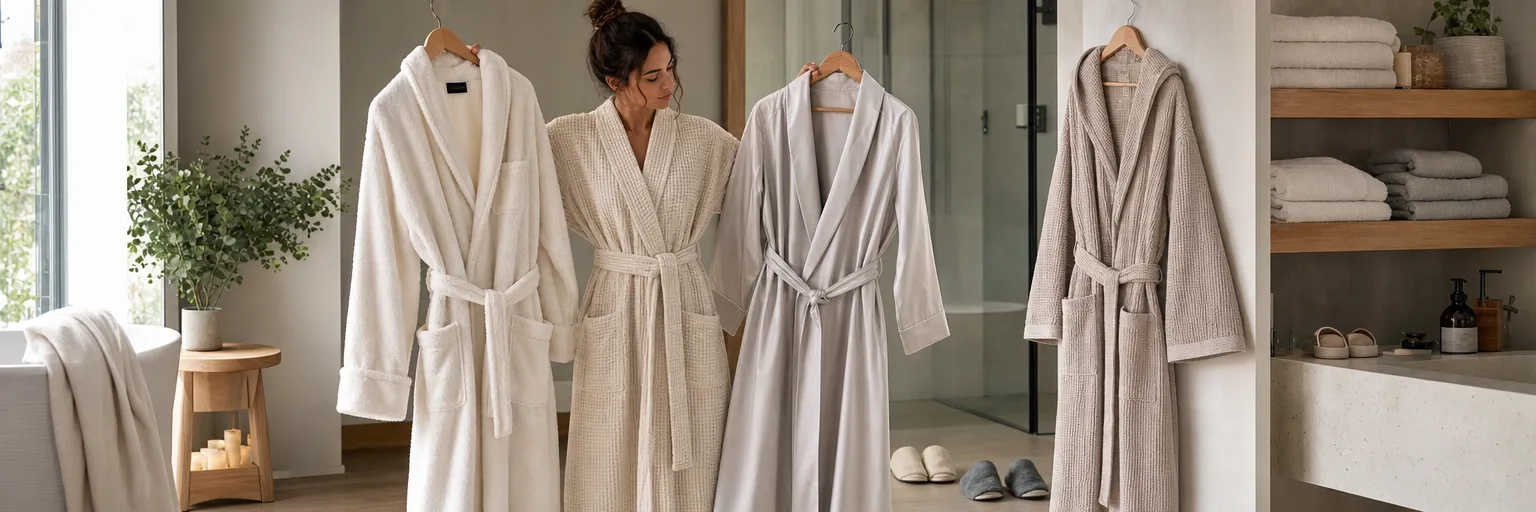
To find a bathrobe that is truly pleasant to wear, it is essential to assess several practical elements: the material, the fabric weight, the cut, the size, and also its intended use. A model suited to getting out of the bath will not necessarily meet the same expectations as a bathrobe designed for relaxing moments at home. By taking these criteria into account, it becomes easier to choose a comfortable, durable piece that fits your habits.
The material at the heart of comfort
The fabric is often the first point to examine. Cotton remains a safe choice for its absorbency, softness, and ease of care. Terry cloth is particularly suitable after a shower or bath, while velour provides a plusher, warmer feel. For lighter use, especially in summer, materials such as linen or waffle weave can be appealing. The choice of material directly influences the level of comfort, the warmth you feel, and the bathrobe’s absorbency.
Fabric weight and absorbency level
Another important criterion concerns the thickness of the fabric, often expressed in GSM. A lightweight bathrobe will be easier to wear and dry quickly, making it practical for everyday use. Conversely, a higher GSM provides a more enveloping, cocooning feel. If the main goal is to dry off effectively after a bath, it is better to choose an absorbent model. For relaxation use, a softer and less thick bathrobe may be enough.
The cut, length, and finishes
The choice of cut depends on personal preferences, but also on the season and the level of comfort sought. A long bathrobe generally provides more warmth, while a mid-length or short version allows greater freedom of movement. The presence of a hood can be a real advantage, especially for keeping the head warm after a shower. Pockets, the belt, and the quality of the stitching also contribute to practicality. These details may seem secondary, but they play a real role in comfort during use.
The right size for a flattering drape
A bathrobe that is too tight restricts movement, while a model that is too large may lack support. It is therefore preferable to check the size guide provided by the brand and take the desired fit into account: fitted or looser. For a wraparound effect, some people prefer to choose a slightly larger size. The key is to achieve a harmonious drape that remains pleasant to wear every day without getting in the way of movement.
A choice guided by use
Before buying, it is useful to define in what context the bathrobe will be worn. For use after a shower, absorbency and softness are the priorities. For a moment of rest in the morning or evening, warmth and flexibility may come first. A bathrobe intended for a spa, a pool, or travel should also be easy to carry and quick to dry. By clearly identifying your needs, it becomes easier to select a model that is as practical as it is pleasant.
Care and durability
A good bathrobe should retain its softness and shape wash after wash. It is therefore advisable to check the care instructions before buying. Natural materials, especially quality cotton, often offer good long-term durability. A sturdy fabric, careful finishing, and good fiber retention allow you to enjoy your bathrobe for longer. This criterion is all the more important for frequent use.
Which bathrobe material should you choose according to your needs?
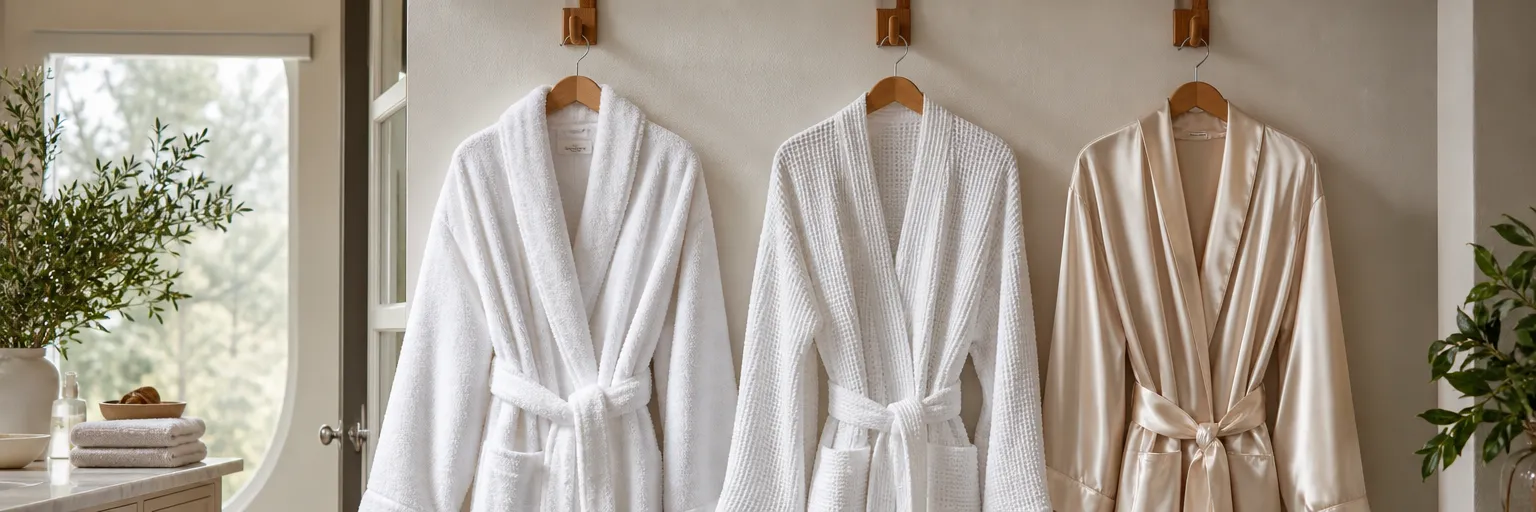
The choice of fabric directly influences how it feels against the skin, its absorbency, the warmth it provides, and how easy it is to care for. Depending on whether the bathrobe is intended for after bathing, winter mornings, or lounging, certain materials will be clearly more suitable than others.
Cotton, the reliable choice for versatile use
Cotton remains the most common material for a bathrobe, as it combines softness, breathability, and good absorbency. It is especially suitable after a shower or bath, when you want a fabric capable of drying effectively while remaining comfortable. A terry cotton model is often recommended for daily use, while a lighter cotton will be more pleasant during the transitional seasons or in a well-heated room.
For a good balance between comfort and durability, it is helpful to check the thickness of the fabric and the quality of the fibers. Combed cotton or organic cotton can offer a more pleasant feel and better long-term wear.
Microfiber, lightweight and practical
If lightweight comfort is the priority, microfiber is an interesting option. This material dries quickly, takes up little space, and is easy to care for. It may suit people looking for a bathrobe that is easy to take along when traveling, to the pool, or to the spa.
On the other hand, its absorbency and cozy feel often differ from those of thick cotton. Microfiber will therefore appeal mainly for its practical qualities rather than for a deeply warm, enveloping sensation.
Velour and fleece for extra warmth
For colder periods or poorly heated interiors, thicker materials such as velour or fleece provide greater comfort. They wrap the body more fully and create an immediate feeling of warmth, which is especially appreciated in winter. This type of bathrobe is ideal for relaxing moments, upon waking or in the evening.
However, these materials are generally less suitable right after a bath if the main goal is to absorb moisture. They are better suited for use as indoor wear than for drying.
Linen and lightweight materials for the warm season
When looking for a more breathable bathrobe, linen or lightweight blends can be a good choice. These materials allow air to circulate more freely and provide a pleasant feeling of freshness during warm weather. They are often appreciated for their natural elegance and drier feel.
This type of fabric is particularly suitable for summer use, after the pool, or for lightly covering up in the morning. However, it is worth keeping in mind that it generally absorbs less than thick terry cotton.
Adapting the material to everyday use
Before buying, it is therefore best to match the material to the bathrobe’s main use. For drying off after a shower, terry cotton often remains the best compromise. For traveling or saving time when drying, microfiber can be a relevant option. If warmth is the priority, velour or fleece will be more suitable. Finally, for summer or a light spa atmosphere, linen and lightweight fabrics offer an interesting alternative.
By clearly identifying your expectations in terms of comfort, absorbency, warmth, and care, you will be able to choose a bathrobe that truly suits your daily routine.
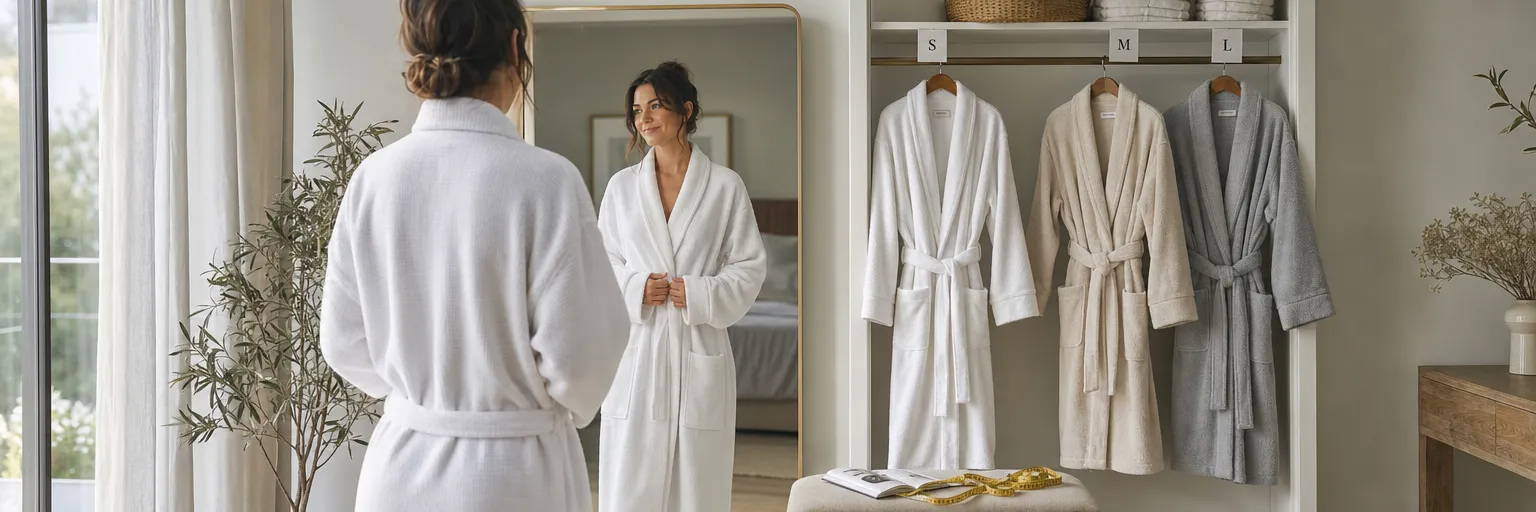
How to find the right bathrobe size?
A well-fitted bathrobe should provide enough ease to wrap the body comfortably, without restricting movement or feeling overly loose. To get it right, you need to consider your body shape, the fit you want, and how you plan to use the garment, whether it is for after a shower, first thing in the morning, or relaxing at home.
Taking your key measurements
Before choosing, it is best to check three simple points of reference: chest measurement, hip measurement, and the desired length. The chest measurement helps ensure that the bathrobe overlaps properly at the front, while the hips provide useful guidance for long or wraparound styles. Length mainly depends on the level of comfort you want: short for more freedom, mid-length for a good balance, long for a cocooning effect.
Consulting the brand’s size guide
From one brand to another, the same size can vary. It is therefore better to compare your measurements with the chart provided by the brand rather than relying only on your usual S, M, or L. This check reduces mistakes and helps you choose a suitable bathrobe, especially when shopping online.
Adjusting the size to the fit and intended use
A terry model worn after a bath can be chosen with a little extra ease to make it easier to put on and improve comfort. On the other hand, a lighter or more structured bathrobe can be worn in a more fitted size if you are looking for a clean silhouette. Also consider the sleeves: if they are too short, they affect comfort; if they are too long, they become impractical for everyday wear.
Checking the details that make all the difference
The belt should allow you to close the garment easily without pulling too much on the fabric. The collar should feel comfortable around the neck, and the shoulders should fall naturally. If you are hesitating between two sizes, the right choice often depends on the look you want: closer to the body for an elegant drape, or slightly roomier for maximum softness and freedom.
What should you do if you’re unsure between two sizes?
When you’re between two sizes, choose the larger one if you like comfortable fits, if you wear the bathrobe over pajamas, or if the fabric has little stretch. On the other hand, a size down may work for a fluid style or if the fit is intentionally loose. Reading customer reviews can also help you determine whether the bathrobe runs small, large, or true to size.
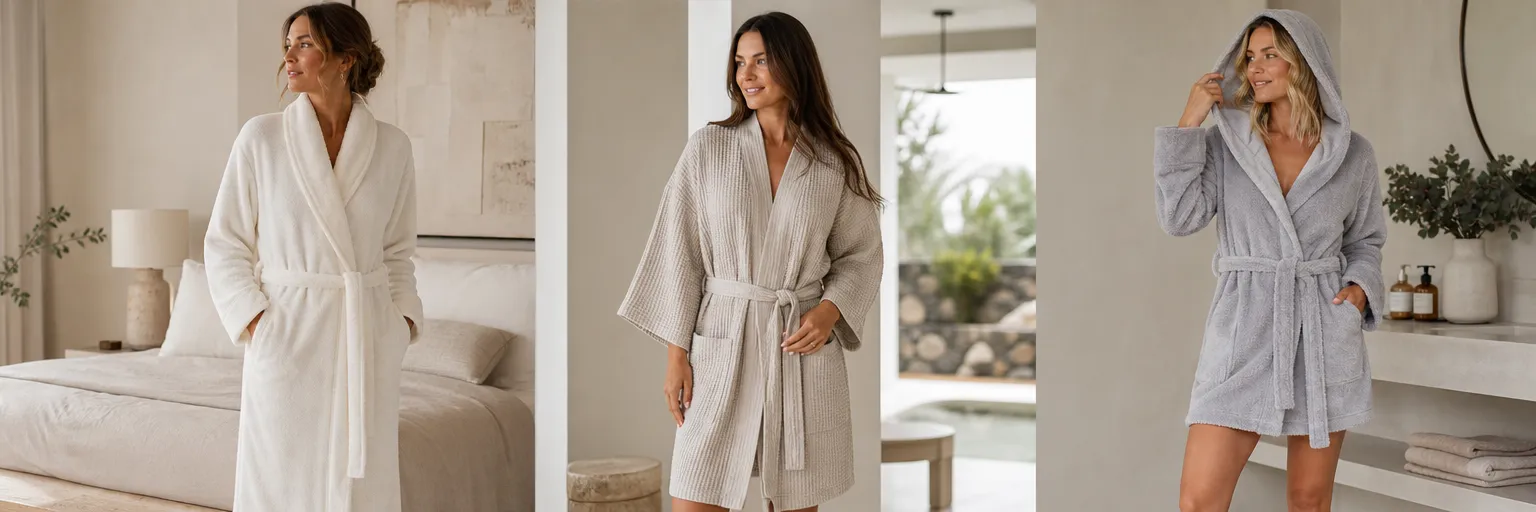
Which bathrobe fit should you choose for optimal comfort?
The fit determines how the bathrobe moves with you, drapes around the body, and suits your daily habits. Between a long, short, loose, or more fitted style, the right choice mainly depends on the level of warmth you’re looking for, the freedom of movement you want, and when you plan to wear it.
Loose fit or fitted cut: finding the right balance
A loose-fit bathrobe provides a cozy feeling that is especially appreciated after a shower or when waking up. It lets air circulate, does not constrict the body, and is well suited to relaxing use. By contrast, a more fitted cut may be preferable for those who want less bulky loungewear that is easier to wear while getting ready in the morning. Ideally, the fit should follow the body naturally without feeling tight, with enough room at the shoulders, arms, and waist.
Length: short, mid-length, or long
Length has a direct impact on thermal comfort. A long bathrobe covers more of the legs and provides an enveloping feeling, which is especially pleasant in winter or in a cool home. A mid-length style is often the best compromise between protection and practicality. A short bathrobe, meanwhile, appeals for its lightness and freedom of movement: it is suited to warm seasons, quick use after a bath, or a more active lifestyle.
Shawl collar, kimono collar, or hood
The type of collar also plays an essential role in the feeling of comfort. A shawl collar enhances the enveloping effect and keeps the upper body warm. A kimono collar offers a lighter, more fluid line, appreciated for its practical and elegant feel. As for the hood, it is a real plus for people looking for extra warmth after a shower, especially for drying hair more quickly and avoiding a cold feeling at the back of the neck.
Details that improve everyday comfort
Beyond the overall cut, certain details really make all the difference: sleeves wide enough for easy movement, a well-positioned belt that holds securely without feeling tight, and practical pockets to keep small items within easy reach. For optimal comfort, it’s best to choose a model with a cut suited to its main use: relaxing at home, after a bath, time at the spa, or your morning routine. A well-designed bathrobe should move with your daily gestures naturally, without ever getting in the way.
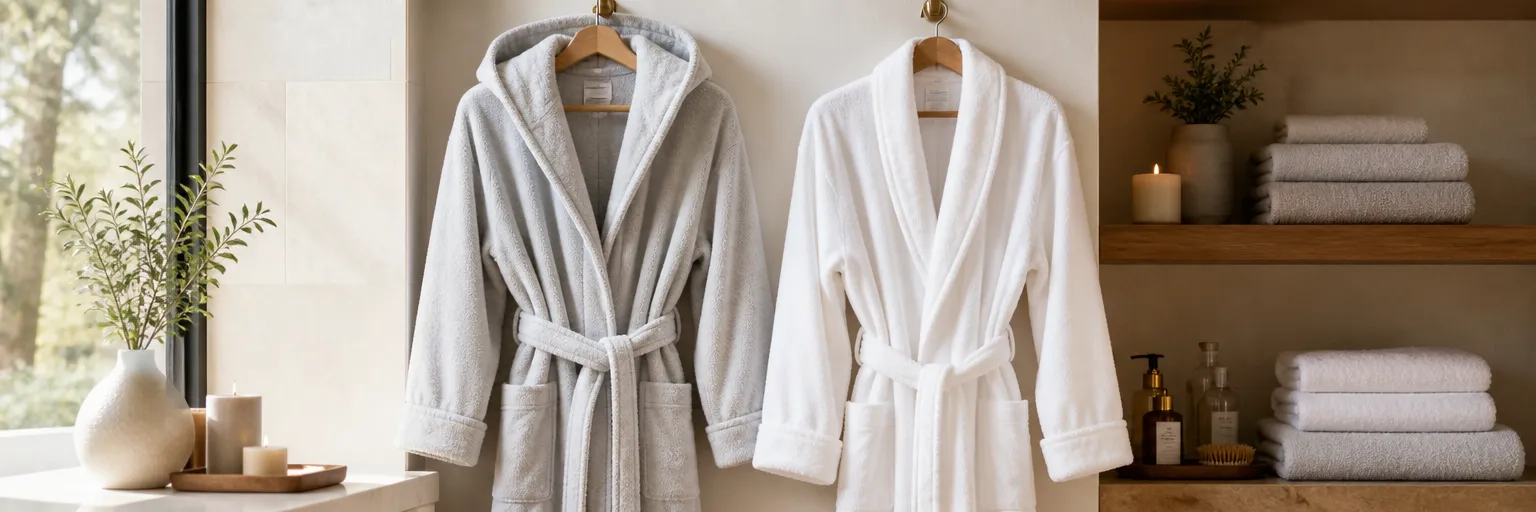
Bathrobe with or without a hood: which should you choose?
The choice between a hooded bathrobe and a hoodless model mainly depends on your habits, the season, and the level of comfort you’re looking for. A hood provides a more enveloping feel and can be especially pleasant after a shower, when getting out of the pool, or on chilly mornings. On the other hand, a bathrobe without a hood appeals for its lighter silhouette, easier wear, and often simpler storage.
The advantages of a hooded bathrobe
A hooded bathrobe is particularly appealing if you’re looking for extra warmth and practicality. It helps protect the head and neck from the cold while offering a cozy feel that is especially appreciated in winter or after a bath. This type of model is well suited to people who want a comfortable bathrobe that offers good coverage, especially in a poorly heated bathroom or after a spa session.
The hood can also be useful for lightly absorbing moisture from the hair, even if it does not replace a towel. It is therefore a good choice for relaxation, wellness stays, or for those who love very enveloping loungewear.
Why choose a bathrobe without a hood
A bathrobe without a hood is often appreciated for its simplicity and versatility. Visually lighter, it is generally easier to slip on every day and is well suited to regular use, especially in the morning or evening. It can also be more comfortable if you do not like the feeling of extra volume around the shoulders or back.
This style is often preferred for an elegant bathrobe, easy to wear around the house, and better suited to mild temperatures. It also slips more easily into a bag if you need to take it to the pool, the gym, or on a trip.
The right choice depending on how you’ll use it
If you're looking for a style designed for warmth, relaxation, and cozy moments, a hood is a real advantage. If your priority is lightness, freedom of movement, and a more discreet cut, it's better to choose a hoodless version. To choose the right bathrobe wisely, you should therefore take your routine into account: getting out of the bath, use at home, holidays, spa, or the need for extra warmth.
In practice, a hooded style is better suited to colder seasons and uses focused on thermal comfort, while a hoodless style better meets a need for simplicity and versatility in everyday life.
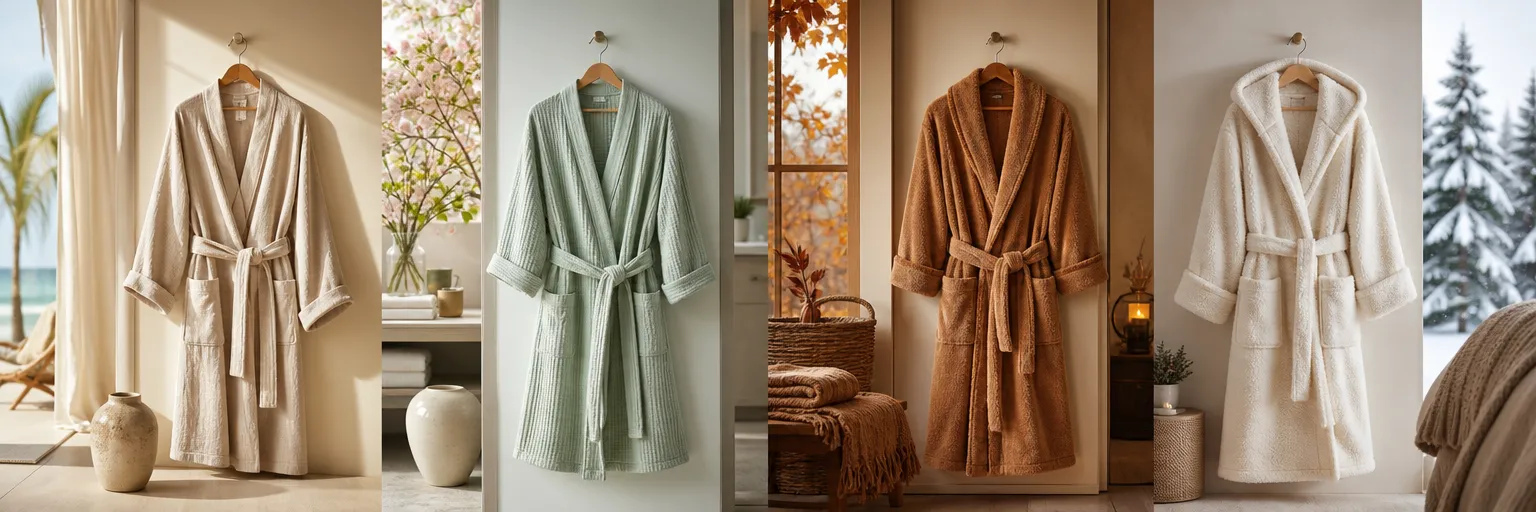
Which bathrobe should you choose depending on the season?
The time of year directly influences the level of warmth, lightness, and absorbency expected. Adapting your bathrobe to the seasons allows you to enjoy a garment that is pleasant to wear all year round, without feeling stifled in summer or lacking comfort in winter.
In spring and summer: prioritize lightness
When temperatures rise, it's best to choose a light, breathable bathrobe that is easy to slip on after a shower. Materials such as lightweight cotton, waffle weave, or blended linen are particularly well suited, as they allow air to circulate more freely and dry quickly. A short or mid-length style can also be more pleasant for everyday wear, especially in an already warm bathroom. During this period, a lightweight bathrobe generally offers the best balance between comfort and practicality.
In autumn and winter: look for more warmth
As soon as temperatures drop, comfort comes from a more enveloping fabric and a heavier weight. Styles made from thick terry cloth, velour cotton, or fleece are often appreciated for their ability to retain warmth after a bath. A long bathrobe, with a shawl collar or hood, enhances this cocooning feeling even more. If the goal is to stay nice and warm in the morning or evening, a warm bathrobe is a particularly suitable option.
Between seasons: focus on versatility
In cool spring weather or at the start of autumn, an in-between style is often the smartest choice. It should be neither too thin nor too thick, so it can adapt to temperature variations throughout the day. A medium-weight cotton bathrobe provides a good level of absorbency while remaining comfortable enough to wear for several hours if needed. This type of comfortable bathrobe is ideal for those looking for a versatile solution.
Also take usage and the room into account
The season isn’t everything: you also need to consider the environment in which the bathrobe will be worn. In a home that is not very well heated in winter, a thick model is often preferable. Conversely, in a well-tempered interior or after use at the spa, a softer fabric may be enough, even in the cold season. To choose the right bathrobe, it is therefore useful to consider the season, the temperature of the home, and the time of use together.
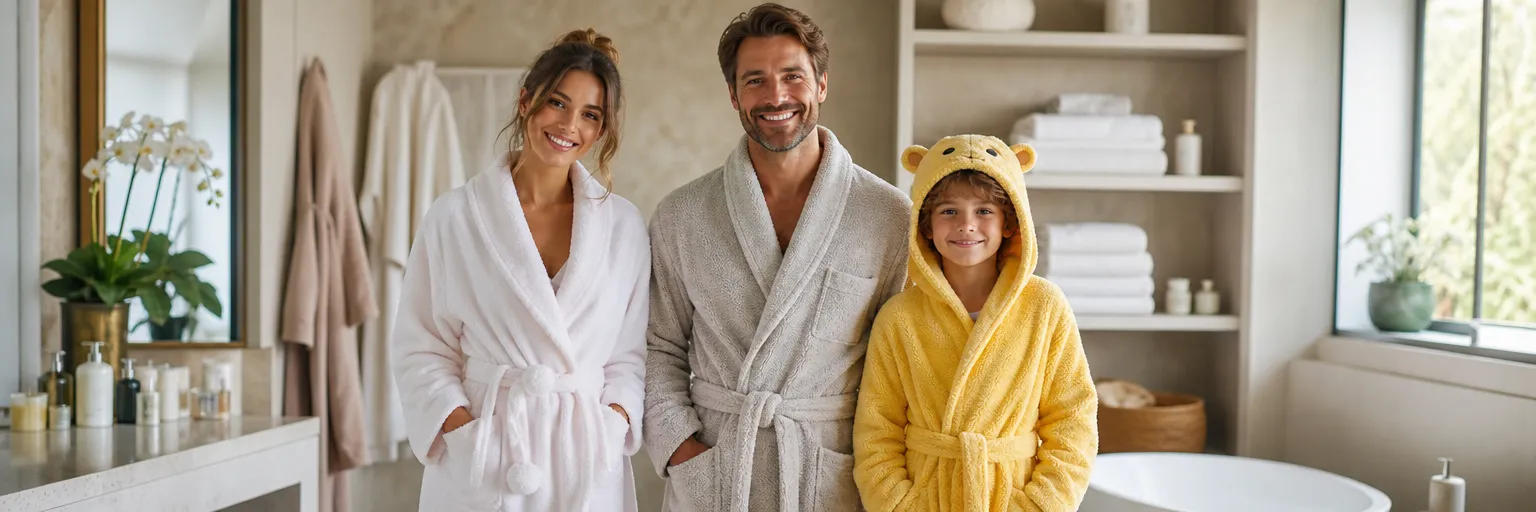
How to choose a bathrobe for women, men, or children?
Depending on who the bathrobe is for, expectations are not quite the same. A model intended for an adult woman will often emphasize elegance or well-being, while a bathrobe for men will focus more on practicality and ease of wear. For a child, the priority remains ease of putting it on, softness, and everyday safety.
For a woman: softness, fit, and use
The choice of a women’s bathrobe depends mainly on when it will be worn. After a shower, an absorbent material such as terry cotton is ideal. For cozy moments, a fleece or velour model provides a more enveloping feeling. Length also plays an important role: a short bathrobe offers greater freedom of movement, while a long model enhances the comfort effect. In terms of style, many people appreciate a fitted bathrobe, with a soft belt and refined finishes.
For a man: comfort, simplicity, and functionality
A men’s bathrobe is often chosen according to simple criteria: a straight cut, good room across the shoulders, and a fabric that is pleasant to wear. Cotton models remain a safe choice for their absorbency and durability. For morning use or after a bath, deep pockets and a well-secured belt are especially practical. Understated tones and clean cuts generally match the most common preferences.
For a child: safety and simplicity above all
To choose a children’s bathrobe, it is best to opt for a soft, lightweight, and easy-to-wash fabric. A hooded model can be very useful for drying hair quickly and keeping the child warm after a bath. It is also recommended to check that the length does not interfere with walking and that the belt remains easy to tie. Bathrobes with snap buttons or a sewn-on tie can be worth considering to reduce the risk of losing them and make dressing easier.
Details to compare before buying
Whatever the profile, certain elements deserve special attention: the quality of the stitching, how well the fabric holds up after washing, its softness against the skin, and how well it suits real-life use. A bathrobe will not have exactly the same advantages as a model designed for relaxing at home. By comparing the material, the cut, and the level of warmth you are looking for, it becomes easier to find a bathrobe truly suited to each member of the family.
What weight should you choose for an absorbent and comfortable bathrobe?
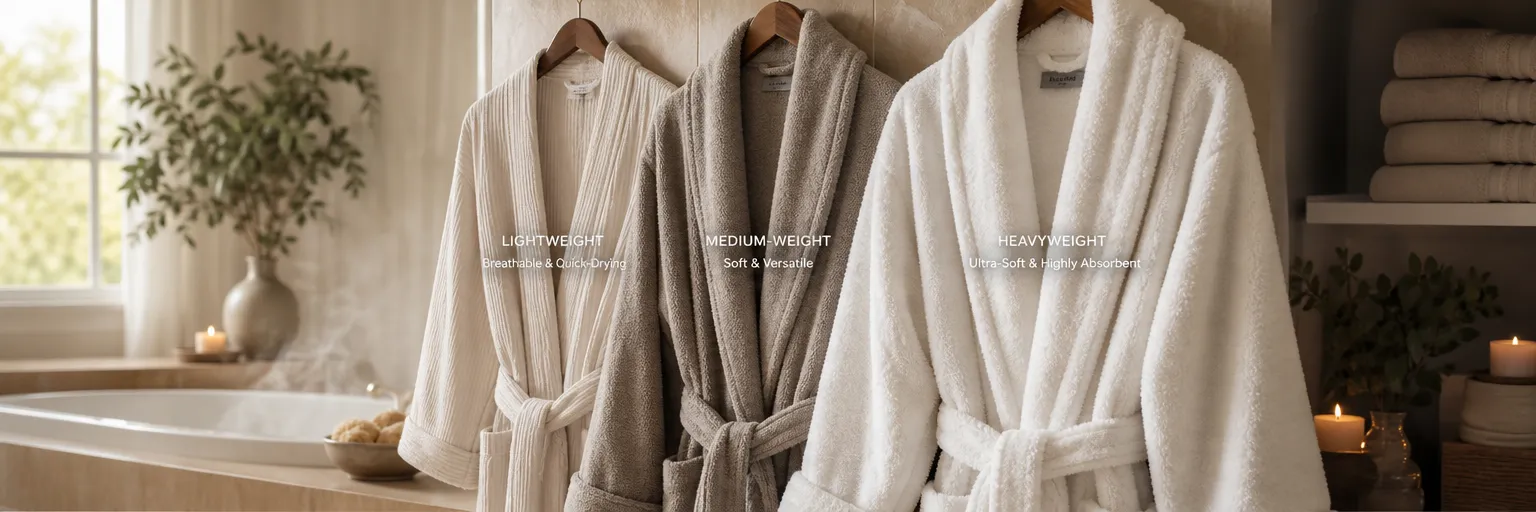
Expressed in grams per square metre, fabric weight makes it possible to assess the density of the fabric and gives a good indication of the level of absorbency, the plush feel, and the warmth provided by a bathrobe. The higher it is, the thicker and more enveloping the model feels; the lighter it is, the more discreet and easy it is to wear every day.
Understanding weight benchmarks
A bathrobe around 300 to 350 g/m² will suit those looking for a lightweight model, pleasant after a shower and quick to dry. Between 400 and 500 g/m², you will often find the best balance between comfort, flexibility, and absorbency. Above 500 g/m², the bathrobe becomes thicker, warmer, and especially cocooning, with an enhanced feeling of softness.
Choosing according to how the bathrobe will be used
For occasional use, in summer, or in a well-heated bathroom, a light fabric weight may be enough. On the other hand, for use after a bath, when getting out of the pool, or to enjoy a real moment of relaxation at home, a medium to high fabric weight will often be more suitable. If your priority is an absorbent bathrobe, it is better to avoid overly thin models, which dry quickly but retain moisture less effectively.
Finding the right balance between comfort and practicality
A high fabric weight is not always the best choice. A very dense bathrobe can feel heavier on the shoulders and take more time to wash and dry. Conversely, a model that is too light may lack structure and comfort, especially in winter. The ideal approach is therefore to aim for a level of fabric weight that matches your habits: light for simplicity, medium for versatility, high for a warm and enveloping effect.
Combining fabric weight and material
The final feel also depends on the textile used. A medium-weight terry cotton will often offer an excellent balance between comfort and performance, while a more velour or fleece-like fabric will mainly create a sense of warmth. To choose a truly pleasant bathrobe, you therefore need to consider the weight together with the material, the season, and how often it will be used.
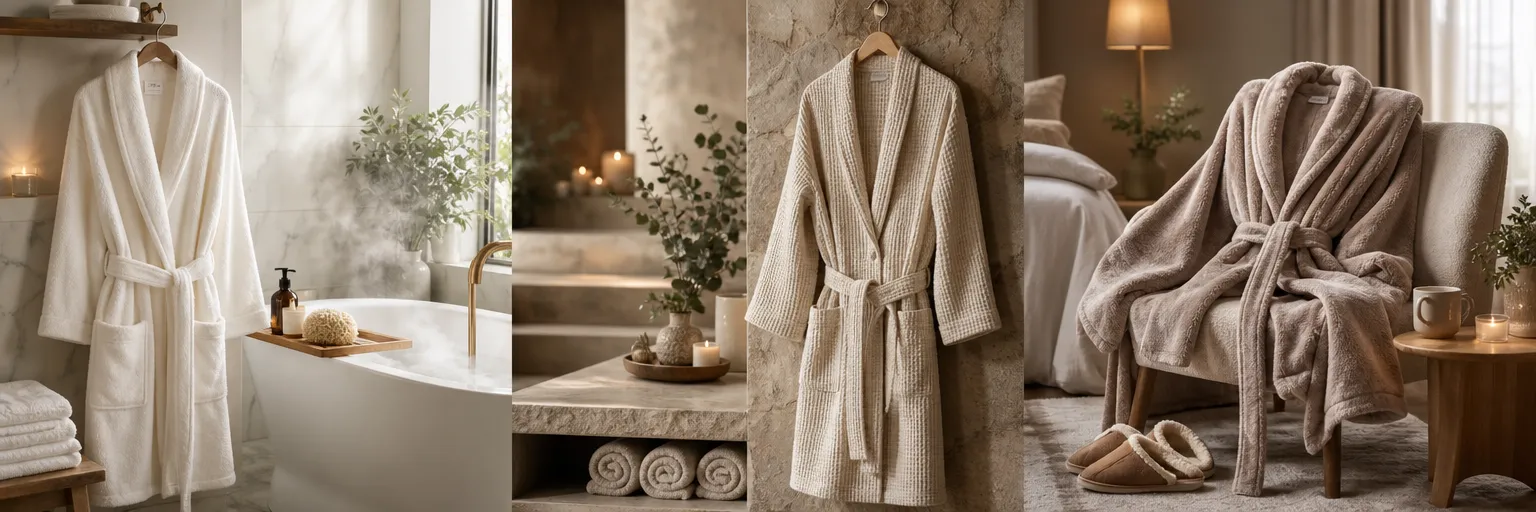
How to choose your bathrobe according to use: bath, spa, or home?
Between stepping out of the shower, relaxing moments at the spa, and cozy time at home, the same model does not always meet the same expectations. To make the right choice, you should mainly look at the level of absorbency, the feel against the skin, the lightness of the fabric, and thermal comfort so you can choose a bathrobe that is truly suited to your daily routine.
For after the bath: absorbency comes first
After a shower or bath, the main goal is to dry off quickly while staying comfortable. A cotton terry bathrobe, a looped fabric bathrobe, or one with a fairly generous weight is often the best option. This type of model absorbs moisture effectively, provides a wraparound feel, and reduces the chill right after bathing. A mid-length or long cut, combined with a practical belt, is particularly well suited to this use.
For the spa: lightness, softness, and elegance
In a wellness setting, people generally look for a bathrobe that is pleasant to wear for a while, and not just for drying off. A lighter, more flexible, and softer model may then be preferable. Waffle fabric is often appreciated for its elegant drape, good breathability, and ability to dry faster than a very thick fabric. For spa use, a lightweight bathrobe or one with a refined texture lets you move comfortably between treatments, the hammam, or the relaxation area, without feeling weighed down.
For home: everyday comfort and warmth
At home, a bathrobe often becomes a true loungewear garment. It therefore needs to be pleasant to wear for extended periods, whether in the morning, in the evening, or during a moment of rest. A model in soft cotton, fleece, or a gentle-touch fabric will be ideal for prioritizing comfort. If you like staying wrapped up in it for a long time, a comfortable bathrobe with a shawl collar or hood can provide an even cozier feel. On the other hand, for occasional use in a well-heated home, a lighter version will often be enough.
Adapt the details to your habits
Beyond the main use, certain practical details make all the difference. Pockets are useful around the house, a hood can be handy after a bath, while a clean-cut design is often better suited to a spa setting. If you alternate between several uses, the smartest choice is an absorbent bathrobe that is not too thick, able to dry properly while remaining comfortable to wear. In short, the more bath-oriented your use is, the more absorption matters; the more relaxation-oriented it is, the more lightness and softness become essential.
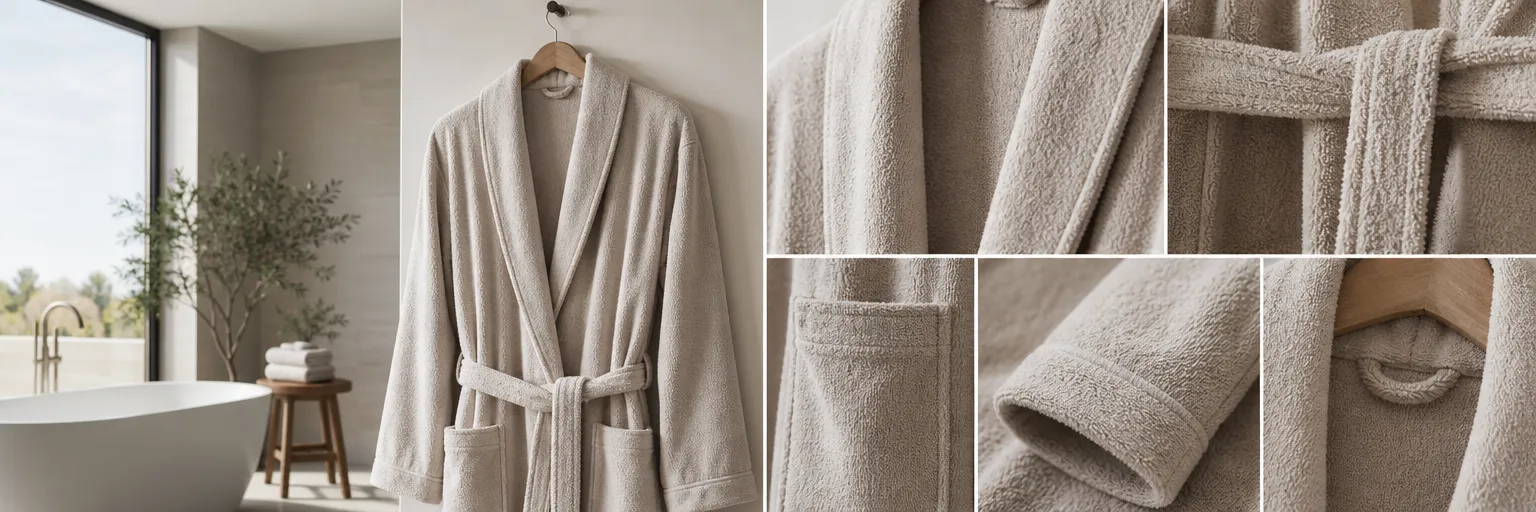
What details and finishing touches should you check before buying a bathrobe?
Beyond the material or cut, certain manufacturing elements make all the difference over time. A bathrobe may look appealing at first glance, but it is often the finishing touches, the strength of the seams, and the quality of the accessories that determine its true level of comfort.
Examine the seams and construction
Even, straight seams with no loose threads are a good indicator of quality. It is best to check the areas that get the most strain, such as the shoulders, armholes, pockets, and belt loops. A well-constructed bathrobe will withstand repeated washing better and keep its shape longer. Discreet reinforcements at tension points are also a real advantage.
Check the belt, loops, and fastening
The belt should be wide enough, flexible, and sturdy enough to provide comfortable support without twisting. The side loops also deserve special attention: if they are too thin or poorly stitched, they can come loose quickly. On some models, an inner tie or a discreet button improves the fit even further, making the bathrobe more practical for everyday use.
Check the pockets, hood, and edge finishes
The pockets should be well positioned, deep enough, and properly attached to remain functional. If the model includes a hood, it is best to look at its drape and thickness: it should be neither too heavy nor poorly balanced. The trims, hems, and bindings should have a neat finish. These details influence both the appearance and the overall durability of the garment.
Assess the quality of the fabric after handling it
Before buying, it is helpful to touch the fabric to assess its density, flexibility, and appearance. A textile that is too rough, too thin, or pills easily can quickly lose its comfort. Conversely, a bathrobe with a soft feel, an even texture, and careful finishing inspires greater confidence. If possible, also check the care instructions: a beautiful model that is difficult to wash may become less appealing in everyday use.
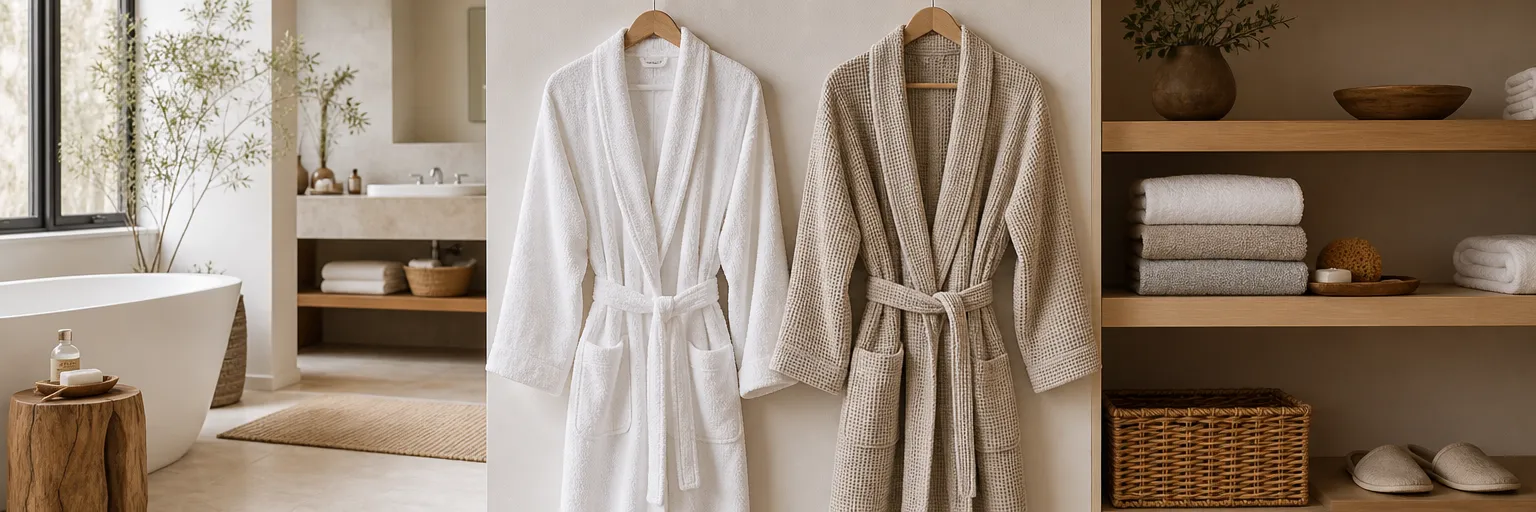
How can you combine style, comfort, and practicality when choosing a bathrobe?
A well-chosen bathrobe is not just soft or attractive: it should also fit naturally into your daily routine. To make the right choice, the ideal approach is to look for a balance between style, comfort, and ease of use, so you get a bathrobe that is as pleasant to wear as it is to live with day after day.
Choosing a design that matches your preferences
Style starts with the cut, length, and finishing details. A long model brings an elegant, enveloping touch, while a short or mid-length bathrobe offers a lighter, more modern silhouette. Neutral colors are easy to match and remain timeless, whereas bolder shades or contrasting details add more character. For regular use, it is best to choose a comfortable bathrobe whose look you genuinely like, so you enjoy wearing it every day.
Prioritizing comfort in every detail
Comfort depends as much on the fabric as on the overall feel once the garment is on. A supple fabric that feels pleasant against the skin and suits the ambient temperature significantly improves the experience. The belt should stay in place without being too tight, the sleeves should not restrict movement, and the collar should remain comfortable around the neck. A soft bathrobe, well cut and roomy enough, allows you to fully relax after a shower, upon waking, or during a restful moment at home.
Focusing on practical features for everyday use
Practicality often makes all the difference in daily use. Well-placed pockets, a hood depending on your needs, a length suited to your habits, or fabric that is easy to wash are all criteria that should not be overlooked. If you use your bathrobe often, also check its absorbency and drying time. For use at home, a lighter model that is easy to care for may be more suitable. The goal is to choose a garment that is as functional as it is pleasant.
Finding the right balance for your lifestyle
The best choice is the one that matches your actual needs. Someone primarily looking for a cozy feel will not have the same expectations as someone who wants an elegant bathrobe to complement a wellness routine. By taking into account your aesthetic preferences, your need for warmth, how often you will use it, and the level of care you want, you will be able to choose a durable, harmonious model that truly suits your daily life.
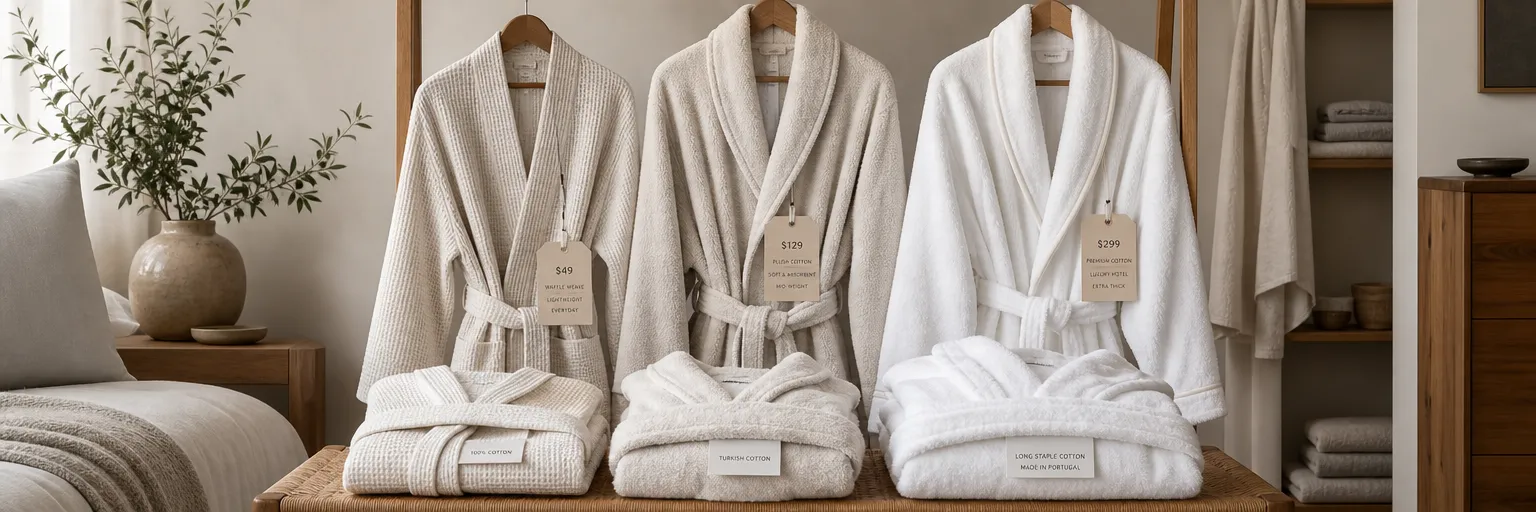
What budget should you plan for to find a quality bathrobe?
The price of a bathrobe varies greatly depending on the material, weight, quality of the finishes, and the brand. In practice, it is possible to find a decent low-cost model, but for regular use and a good level of comfort, it is better to view price as one indicator among others rather than the only purchasing criterion.
The main price ranges to know
Below 30 euros, you will mostly find entry-level bathrobes, often thinner, less absorbent, or less durable after several washes. Between 30 and 70 euros, the selection becomes more appealing for daily use, with better materials and more refined finishes. From 70 to 120 euros, you generally gain access to a quality bathrobe that is thicker, more durable, and more pleasant to wear. Beyond that, the price may also reflect the brand positioning, the design, or more premium materials.
What justifies a higher price
A higher budget mainly makes sense if the bathrobe offers excellent absorbency, holds up well over time, and provides real everyday comfort. A natural material such as combed cotton, balanced fabric weight, sturdy seams, a well-attached belt, or a lined hood can make all the difference. A good bathrobe is therefore not judged only by its appearance, but also by its ability to remain soft, enveloping, and practical wash after wash.
The right budget depending on the intended use
For occasional use, for example in a guest room or after a few baths, a moderate budget may be enough. On the other hand, if the bathrobe is worn every day at home, after a shower, or in a spa setting, investing a little more is often worthwhile. For this frequent use, aiming for a mid-range or higher-end model often provides a better balance of comfort, durability, and lifespan.
How to avoid paying too much
To make a smart purchase, it is useful to compare tangible features rather than relying solely on the brand. Check the composition, fabric weight, presence of pockets, quality of stitching, and care instructions. Reading customer reviews can also help identify a model that is truly durable. Finally, seasonal promotions sometimes make it possible to buy a higher-quality bathrobe without exceeding your initial budget.
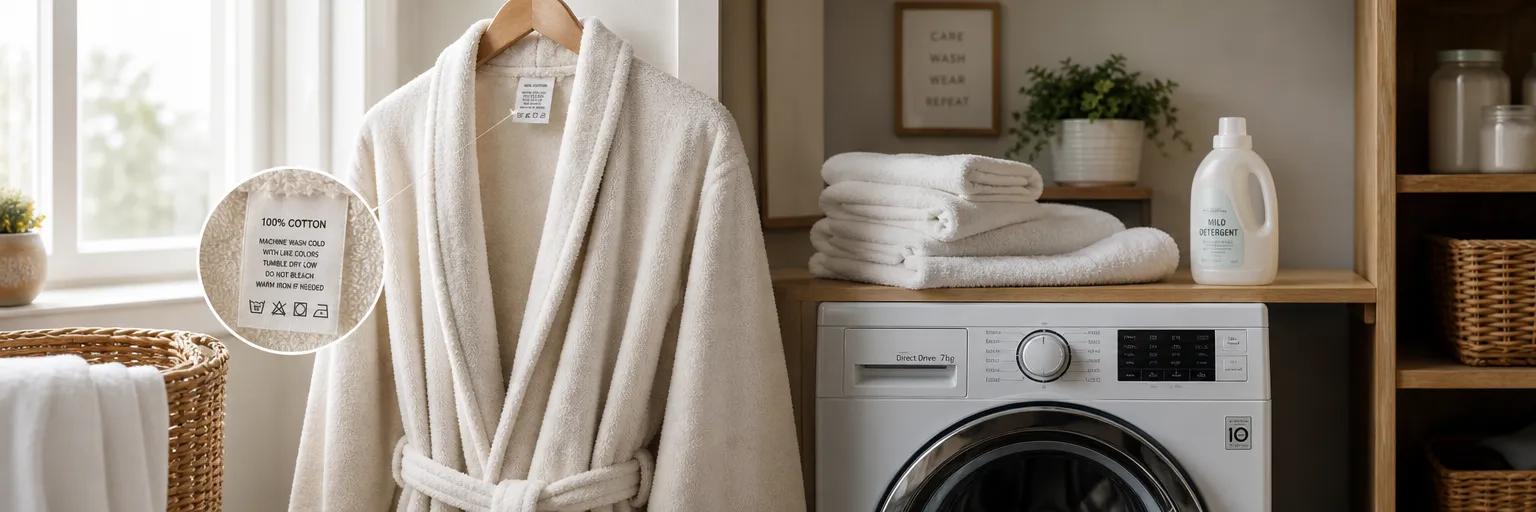
How should you care for your bathrobe to keep it for a long time?
Proper care helps preserve the softness, absorbency, and shape of a bathrobe over repeated washes. A few simple steps are enough to prevent it from becoming rough, losing its loft, or having its fibers wear out prematurely.
Follow the washing instructions
The first rule is to check the label before every wash. The recommended temperature depends on the material: terry cotton often withstands a more thorough wash, while velour, fleece, or certain blends require greater care. For effective bathrobe care, it is best to use a mild detergent, avoid overloading the drum, and wash the bathrobe with similar textiles to limit excessive friction.
Preserve softness and absorbency
Excessive use of fabric softener can coat the fibers and reduce absorbency, especially on a bathrobe. It is therefore better to use very little, or none at all. Good bathrobe washing also depends on sufficient rinsing to remove detergent residue, which is responsible for a rougher feel over time. To keep the fabric supple and pleasant, it is helpful to shake out the bathrobe after washing before drying it.
Choose suitable drying
Drying directly affects the garment’s durability. Air drying works very well, provided the bathrobe is hung in a well-ventilated place and not left damp for too long. A tumble dryer can be used on a moderate setting if the label allows it, especially to restore fluffiness to terry cloth. On the other hand, excessive heat can damage the fibers, shrink the fabric, and alter the fit. To keep your bathrobe in good condition, it is best to favor gentle and consistent care.
Avoid premature daily wear
Beyond washing, certain habits can significantly extend the lifespan of your bathrobe. It is recommended to let it dry completely after each use, especially after a shower, to prevent musty odors. Ideally, hang it on a hanger or a wide hook so the collar does not lose its shape. If the model has a sewn-in belt, pockets, or a hood, remember to check the seams regularly. These small bathrobe care habits help keep the garment comfortable, clean, and pleasant for a long time.