
 France
 English
 Deutsch
 Español
 Italiano
 Nederlands
 Polski
 Português
Why is it important to clean a bathrobe properly?
A bathrobe is an everyday textile that comes into direct contact with the skin, often after a shower, a bath, or upon waking up. It absorbs moisture and retains traces of sweat, cream, and sometimes even dead skin cells. Cleaning it properly helps preserve hygiene, comfort, and the quality of the fabric over time.
Maintain everyday hygiene
A poorly maintained bathrobe can become a breeding ground for unpleasant odors and bacteria, especially if it stays damp for several hours. Regular washing helps keep it clean, hygienic, and pleasant to wear, particularly when it is used every day.
Preserve softness and absorbency
Whether it is made of cotton, terry cloth, or a lighter fabric, a bathrobe needs proper care to maintain its suppleness. When the fibers become clogged, the fabric can turn rough and lose its absorbency. Properly cleaning your bathrobe therefore helps maintain its comfort and soft feel after every wash.
Extend the garment’s lifespan
Proper care helps limit premature wear, distortion, and the loss of fiber quality. By following the recommended washing frequency and care instructions, you can keep your bathrobe in good condition for longer. It is also a simple way to prevent it from fading, shrinking, or losing its plush feel.
Enjoy linen that is always pleasant to wear
A clean bathrobe provides an immediate feeling of freshness and improves comfort after washing or during relaxing moments at home. Washing it properly also means taking care of your household linen and reinforcing the sense of well-being associated with its use.

Read the label before washing a bathrobe
Before putting it in the washing machine, the care label provides the essential information needed to clean a bathrobe without damaging it. It specifies the recommended temperature, the type of wash cycle, drying precautions, and sometimes even products to avoid. This simple habit helps preserve the softness, shape, and absorbency of the fabric.
Identify the washing symbols
The symbols on the label indicate whether the bathrobe can be machine washed, put on a delicate cycle, or requires more specific care. A tub symbol shows the maximum temperature, while a crossed-out triangle may indicate that bleach should be avoided. Checking these instructions helps you choose the right cycle and limit premature wear of the fibers.
Adapt washing to the fabric
A cotton, terry cloth, fleece, or satin bathrobe does not require the same care. The label helps identify the exact fabric and adjust washing accordingly. For example, a thick, absorbent fabric can often tolerate a higher temperature, whereas a finer material requires more delicate handling. Reading this information is especially useful for avoiding shrinkage, distortion, or loss of softness.
Check drying and ironing instructions
Caring for a bathrobe does not stop at washing. The label also specifies whether tumble drying is allowed, recommended at a low temperature, or completely discouraged. Some fibers do not handle excessive heat well, which can make the garment rough or weaken its texture. Ironing instructions are also important, especially for lightweight or more refined fabric models.
Avoid the most common mistakes
Many bathrobes get damaged simply because the care instructions are not checked. Washing at too high a temperature, using a spin cycle that is too strong, or applying an unsuitable product can permanently damage the textile. Taking a few seconds to read the label therefore helps you use the right method from the start and extend the life of the bathrobe.

How often should you wash a bathrobe?
How often it should be washed mainly depends on how the bathrobe is actually used, the fabric, and the environment in which it dries. When worn right after a shower, it absorbs moisture, skincare residue, perspiration, and sometimes dead skin cells. To keep the garment pleasant to wear and limit unpleasant odors, it is recommended to wash a bathrobe regularly, without waiting until it looks visibly dirty.
The right frequency depending on use
For daily use, washing every 3 to 4 wears is often a good guideline. If the bathrobe is used after every bath or shower and often stays damp, it may be better to clean a bathrobe every 2 to 3 uses. On the other hand, a model worn occasionally, over pajamas or for just a few minutes, can be washed a little less often, provided it is aired out well after each use.
Signs that indicate it needs washing
Certain signs show that it’s time to wash it: fabric that feels less soft, a damp smell, a lost sense of freshness, or marks left by body products. In a poorly ventilated bathroom, moisture can quickly settle into the fibers. In that case, it’s better to wash a bathrobe more often to preserve its cleanliness and comfort.
Adjust care according to the fabric
A terry cotton bathrobe, which is highly absorbent, generally requires more regular care than a lightweight satin or fleece bathrobe. Thick models retain more water and can develop odors more quickly if they do not dry properly. To clean a bathrobe properly, you therefore need to take into account its texture, drying time, and how often it is worn.
The right habits between washes
Between machine washes, the ideal approach is to hang the bathrobe in a well-ventilated place, without leaving it bunched up behind a door. Letting it dry completely after use helps space out washes while maintaining good hygiene. This simple habit also makes it easier to wash a bathrobe at the right time, without overdoing it or neglecting it.
How to prepare a bathrobe before washing?
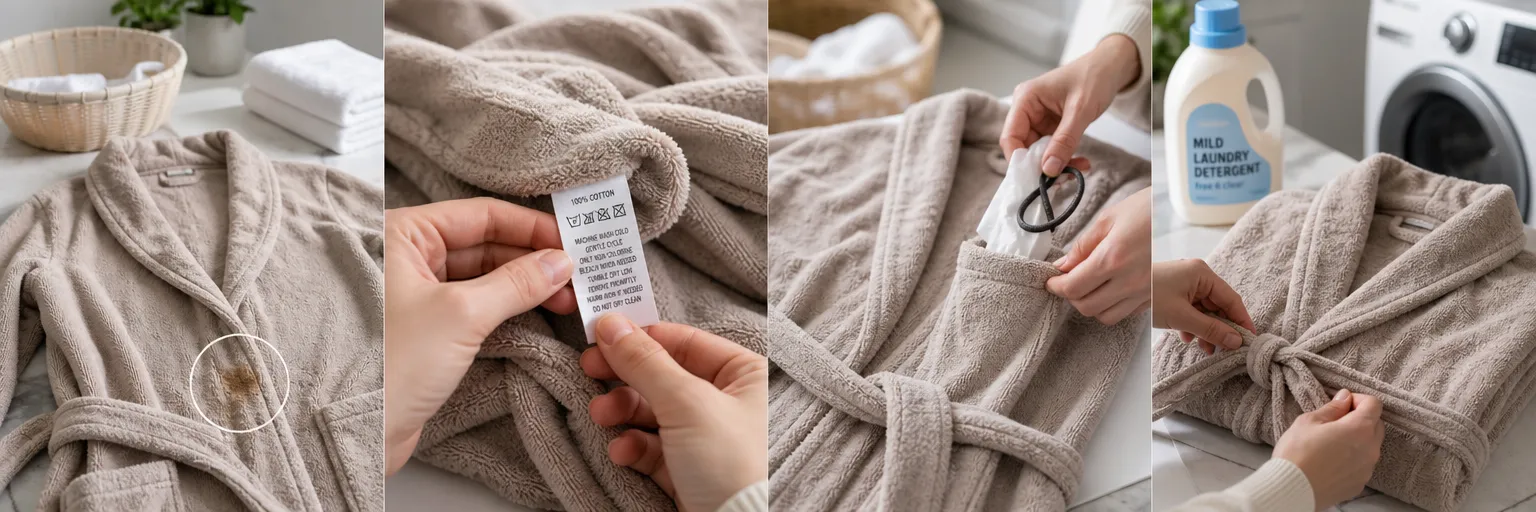
A few simple steps are enough to get the bathrobe ready before putting it in the washing machine. This step helps preserve the softness of the fabric, prevent premature wear, and achieve a more effective wash, especially when the garment is thick, absorbent, or delicate.
Check the overall condition of the bathrobe
Start by giving the bathrobe a light shake to remove dust, hair, or small bits of lint. Then inspect the areas most exposed to wear, such as the collar, sleeves, belt, and pockets. If you notice a stain, it is best to treat it before the wash cycle so that it does not set in further.
Take the opportunity to also look for a pulled thread, a weakened seam, or a poorly attached button. Preparing the garment beforehand helps wash a bathrobe under better conditions while reducing the risk of damaging the fabric during the drum cycle.
Empty the pockets and remove accessories
Before washing, carefully empty the pockets to remove tissues, papers, or small objects. These items can leave residue on the fabric or damage the machine. If the belt is removable, take it off if possible, or tie it loosely to prevent it from getting tangled with the rest of the laundry.
Also remember to fasten any buttons, snaps, or zippers if the model has them. This reflex is useful for cleaning a bathrobe without snags or excessive friction, especially when it is washed with other textiles.
Pre-treat stains gently
If there are traces of cream, soap, makeup, or noticeable dampness, apply a stain remover suitable for the fabric. Let it work for a few minutes without rubbing too hard, especially on plush fibers such as terry cloth or velour. Overly aggressive handling can flatten the fabric or alter its appearance.
To wash a bathrobe effectively, it is better to target dirty areas before the cycle rather than increasing the temperature or the amount of detergent. This preparation is particularly useful for thick textiles that easily retain residue.
Sort by fabric and color
A white, colored, or dark bathrobe should not be prepared in the same way. It is advisable to separate it from laundry that may bleed and to wash it with items of a similar color. Sorting is also important according to the fabric: cotton, microfiber, satin, or fleece do not all react the same way in the wash.
Turning the bathrobe inside out before putting it in the machine can also help preserve its outer appearance. This precaution is useful for washing a bathrobe while limiting visible friction, especially if the fabric is fluffy or very soft.
Avoid overloading the machine
As a bathrobe takes up space and absorbs a lot of water, it is best to leave enough room for it in the drum. An overloaded machine prevents proper agitation, reduces washing efficiency, and makes rinsing more difficult. The textile may then come out poorly cleaned or rougher.
Preparing the load properly helps clean a bathrobe more evenly, while protecting its texture and absorbency. A few minutes of preparation before the cycle often make all the difference in the final result.

Washing a bathrobe in the machine: the right settings
To preserve the softness, absorbency, and shape of a bathrobe, the choice of program matters just as much as the detergent used. The right setting cleans the fabric effectively while limiting shrinkage, fiber wear, and the gradual loss of softness over repeated washes.
Choose the right temperature
In most cases, washing at 30 or 40 °C works very well for a cotton, microfiber, or terry bathrobe. This temperature helps remove everyday dirt, perspiration, and skincare product residue without damaging the fabric. For very dirty white laundry, a higher temperature can sometimes be considered, but only if the care label allows it.
If the bathrobe is thick or often used after a shower, it is best to avoid repeated very hot washes, which can stiffen the fibers and dull the colors. Washing a bathrobe in the machineat a moderate temperature generally remains the best compromise between hygiene and durability.
Select an appropriate program
A cotton or delicate program, depending on the fabric, delivers good results. The key is to choose a cycle that is effective enough to rinse the fabric thoroughly, without overly aggressive agitation. For bathrobes made from sensitive materials, such as satin or certain textile blends, a gentle program is preferable.
It is also advisable not to overload the drum. A bathrobe absorbs a lot of water and needs space to be washed and rinsed properly. How to wash a bathrobe without damaging it? By allowing water and detergent to circulate freely in the machine.
Set the spin cycle carefully
Spinning too hard can excessively crease the fabric, distort certain finishes, or wear out the fibers. For a classic bathrobe, a medium speed, often between 800 and 1 000 rpm, is more than enough. This removes excess water without compromising the comfort of the fabric.
The most delicate models require an even lighter spin. Conversely, a thick terry bathrobe generally tolerates a moderate spin well, provided the manufacturer's instructions are followed. Washing a bathrobe should always strike a balance between effectiveness and respect for the fabric.
Measure detergent and additional products properly
An excessive amount of detergent can leave residue in the fibers and reduce the bathrobe’s absorbency. It is better to use a dose suited to the load size and the hardness of the water. A mild detergent is often preferable, especially for plush textiles or bathrobes worn on sensitive skin.
Fabric softener should be used sparingly, as it can coat the fibers and reduce their absorbency, especially on terry cloth. To clean a bathrobe while preserving its comfort, careful rinsing is often more useful than using too much product.
Adjust the settings according to the fabric
A thick cotton bathrobe generally withstands standard cycles better than a fleece, satin, or microfiber model. Synthetic fabrics often prefer low temperatures and a gentle cycle. High-end bathrobes, embroidered or decorated with details, require even more care.
If in doubt, it is better to stick with cautious settings. Washing a bathrobe properly also means taking its composition into account to avoid any unpleasant surprises after drying, such as a rough, misshapen, or less absorbent fabric.
What temperature should you choose to wash a bathrobe?
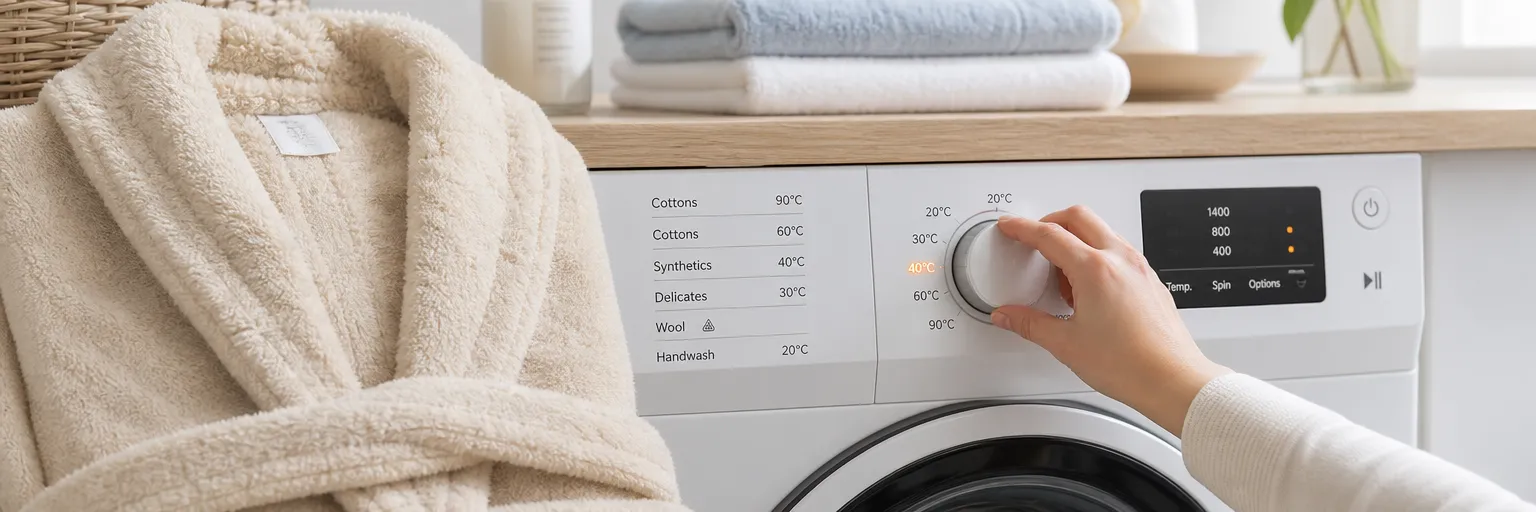
The right setting is not just about choosing very hot or very cold water: above all, you need to adapt the temperature to the fabric, the level of dirt, and the manufacturer's instructions. In most cases, washing a bathrobe at 30 °C or 40 °C provides a good balance between hygiene, softness, and preserving the fibers.
30 °C for delicate fabrics
A temperature of 30 °C is well suited to bathrobes made of synthetic fibers, fleece, satin, or decorated styles. This gentler wash reduces the risk of shrinkage, deformation, and premature wear. It is often the right choice for cleaning a bathrobe that is only lightly soiled or simply worn after a shower.
40 °C for regular care
For a cotton or terry cloth bathrobe used regularly, 40 °C is generally the most suitable temperature. It helps remove odors, perspiration, and body product residue while maintaining good fabric quality. To machine wash a bathrobe without damaging it, this setting is often the safest when the care label allows it.
60 °C only in certain cases
Washing at 60 °C can be considered for a white bathrobe, one that is very dirty, or one used in a context requiring enhanced hygiene. However, you should check that the fabric can withstand this heat, as too high a temperature can make the fabric rougher, dull the colors, or cause the garment to shrink. To care for a bathrobe over the long term, it is best to reserve this program for occasional needs.
Adjust the temperature to the fabric
A thick cotton bathrobe often tolerates heat better than a microfiber or blended-fabric style. Plush textiles, embroidered finishes, and some dark colors require extra care. If in doubt, it is best to choose the lowest recommended temperature for washing a bathrobe without damaging it.
What to avoid
Systematically increasing the temperature does not guarantee a better result. Water that is too hot can set certain stains, damage absorbent fibers, and reduce the bathrobe's softness. To wash a bathrobe properly, it is better to combine the right temperature with a suitable detergent, a gentle cycle, and a drum that is not overloaded.

Which program should you use depending on the bathrobe fabric?
Not all bathrobes react the same way to washing. To prevent a fabric from shrinking, losing its softness, or becoming misshapen, you need to adapt the cycle to its composition. The right program cleans effectively while preserving the texture, absorbency, and lifespan of the garment.
Terry cotton bathrobe
A terry cotton bathrobe generally withstands a cotton or towels program, with moderate to high spin speed if the care label allows it. Because this material is absorbent and often thicker, a standard cycle is usually enough to remove moisture, soap residue, and everyday odors. If the bathrobe is bulky, it is best not to overload the drum in order to achieve an even wash.
Waffle bathrobe
Lighter than terry cloth, waffle fabric does well on a delicate or light synthetics program, depending on the manufacturer’s recommendations. A spin speed that is too high can flatten its texture or wrinkle the fabric excessively. For this type of textile, a gentle cycle helps maintain a soft drape and a neat appearance after drying.
Fleece or microfiber bathrobe
Fleece or microfiber models require extra care. It is better to choose a low-intensity synthetics program, with reduced spin speed. These materials dry quickly, but they can lose some of their softness if washed too aggressively. A mild detergent is often preferable to protect the fibers and limit any rough feel.
Satin or silk bathrobe
For a delicate satin or silk bathrobe, the safest option remains the delicate cycle, or even the machine hand-wash setting if this option exists. The drum should turn slowly and the spin speed should remain very low. In some cases, hand washing is still the best solution, especially if the garment has fragile finishes, embroidery, or delicate inserts.
Velour or blended fabric bathrobe
Bathrobes made of velour, bamboo, or fiber blends require special attention. A gentle program is often recommended to prevent premature wear and preserve the look of the fabric. When the composition combines several materials, it is better to base the wash on the most delicate fiber. If in doubt, a delicate cycle remains the safest option.
The right thing to do when in doubt
If the bathrobe material is not clearly identifiable, it is better to choose a short, gentle program rather than an intensive cycle. This helps reduce the risk of damaging the garment. To wash a bathrobe properly, the ideal approach is to consider the material, the care label symbols, and the level of soiling before starting the machine.
Which detergent should you use for a soft, clean bathrobe?
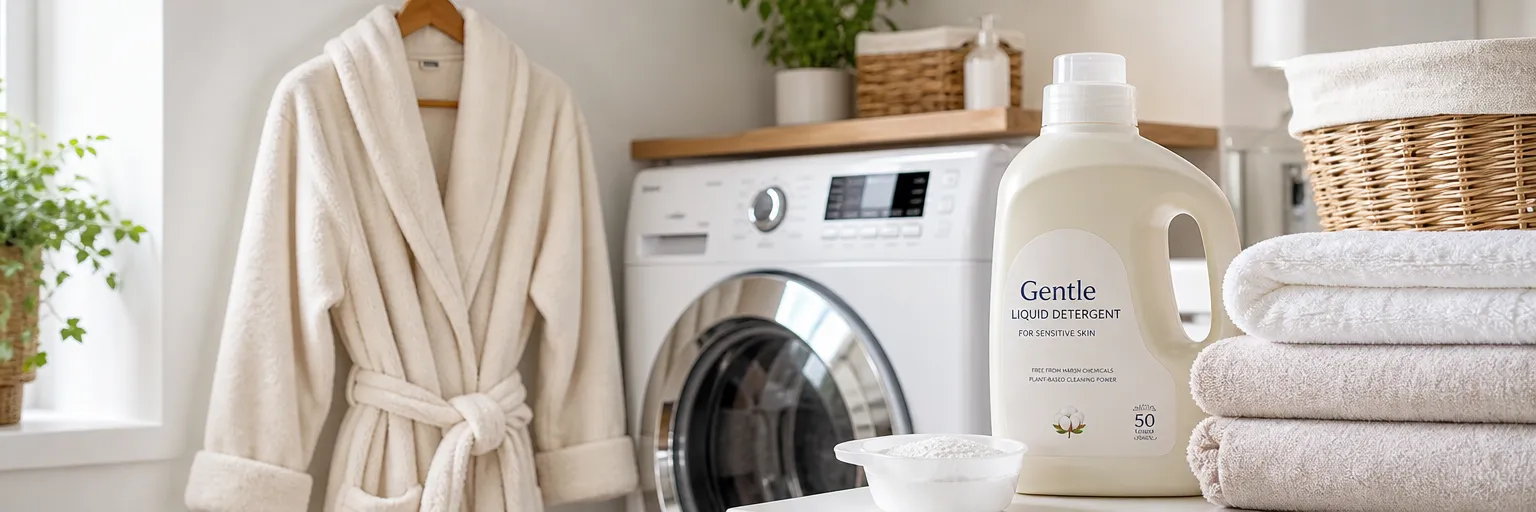
The type of detergent has a direct impact on the feel, cleanliness, and lifespan of the bathrobe. To keep the fabric plush without irritating the skin or clogging the fibers, it is best to choose a formula suited to its material and level of soiling, while avoiding overdosing.
Choose a gentle detergent
For a cotton, terry, or delicate fabric bathrobe, a gentle liquid detergent is often the best choice. It dissolves easily, leaves fewer residues, and helps preserve the softness of the textile. Formulas for delicate laundry or sensitive skin are especially suitable if the bathrobe is worn right after a shower.
A detergent that is too harsh, heavily scented, or rich in bleaching agents can, on the contrary, dull the colors, stiffen the fibers, and reduce comfort over time with repeated washing.
Liquid or powder detergent: which should you choose?
Powder detergent can be useful for a very dirty white bathrobe, but it is sometimes less suitable for thick textiles if it does not rinse out well. In the case of washing at low temperature, the liquid version is generally preferable, as it limits deposits in the fibers. For a colored or dark bathrobe, a detergent specially designed for colors also helps better preserve the fabric’s vibrancy.
If softness is your main priority, it is best to avoid multiplying products. A good, properly dosed detergent for bathrobes is usually enough to achieve a clean result that feels pleasant to the touch.
Products to avoid to keep a bathrobe plush
Fabric softener is not always recommended, especially for absorbent bathrobes. Over time, it can leave a film on the fibers and reduce their ability to absorb moisture. It is also advisable to limit the use of bleach, unless specifically indicated for durable whites, as it weakens the fabric.
Using too much product should also be avoided: too much detergent can make the bathrobe rough after drying and encourage residue buildup. Following the recommended dose according to the laundry load and water hardness remains essential.
Adapt the detergent to the bathrobe material
A thick cotton bathrobe generally tolerates a classic mild detergent, while a fleece, velour, or waffle fabric model requires more precautions. In these cases, a delicate formula without overly harsh agents helps preserve the original look. For baby bathrobes or reactive skin, a hypoallergenic detergent can be a good choice.
In short, to keep a bathrobe clean, soft, and comfortable over time, it is best to opt for a gentle detergent, thoroughly rinsed and used sparingly.
How to clean a cotton bathrobe?
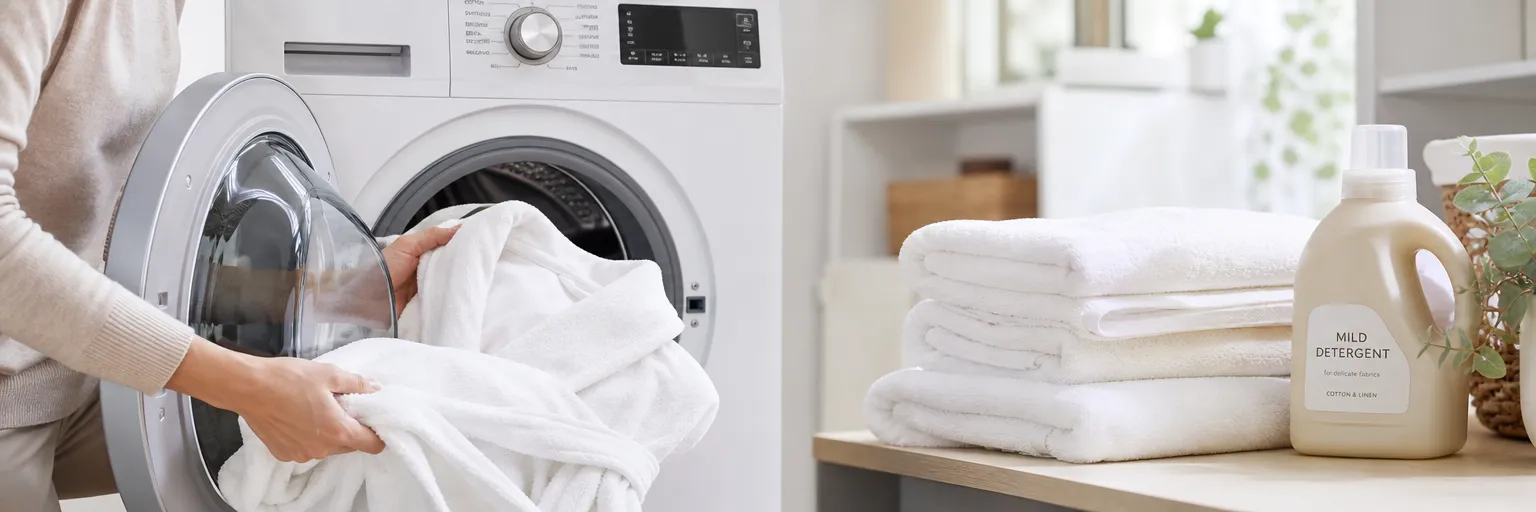
Appreciated for its comfort and absorbency, a cotton bathrobe requires proper care to stay soft, clean, and pleasant to wear. Proper washing helps remove moisture, perspiration, and body product residues without weakening the fibers.
The right settings for cotton
In most cases, a cotton bathrobe can be machine washed at 40 °C with a mild detergent. This temperature works well for regular use and helps preserve the fabric’s texture. If the garment is white or very dirty, a 60 °C cycle may be considered, provided the care label allows it. It is also best to choose a moderate spin cycle to limit wear and prevent the cotton from becoming rough.
Avoid mistakes that damage the fabric
To properly clean a cotton bathrobe, it is best not to use too much detergent or fabric softener too often. These products can leave a residue on the fibers and reduce the cotton’s absorbency. It is also recommended to wash the bathrobe with textiles of a similar color and to avoid items with zippers or abrasive elements that could snag the fabric’s loops.
Drying and maintaining softness
After washing the bathrobe, air drying remains a safe option to preserve the fabric. Tumble drying may be suitable on a low temperature setting if the care label allows it, especially to restore fluffiness to terry cotton. Once dry, gently shaking the bathrobe helps soften the fibers and maintain a plusher feel over time.

How to care for a terry bathrobe?
Recognizable by its thick loops and high absorbency, a terry bathrobe requires regular care to retain its softness, its ability to dry the skin, and its neat appearance over time. Proper care also helps prevent the fibers from becoming rough, flattened, or loaded with detergent residue.
The right steps to preserve terry cloth
Before washing, it is best to shake out the bathrobe and check that nothing has been left in the pockets. Wash it with laundry of a similar texture, such as towels, to limit unnecessary friction. To care for a terry bathrobe, it is best not to overload the drum: this allows water and detergent to circulate more easily between the fibers.
A gentle detergent is enough in most cases. Using too much product can clog the loops and reduce absorbency. It is also advisable to limit fabric softener, which is often responsible for making terry textiles feel less absorbent.
Temperature, drying and softness
In most cases, washing at 40 °C works very well, unless the label indicates otherwise. This setting helps wash a terry bathrobe without damaging the fabric. A moderate spin cycle is preferable so as not to flatten the fibers and to keep a pleasant drape.
After washing, dry the bathrobe quickly in a well-ventilated area. A tumble dryer can be used at a moderate temperature if the manufacturer allows it: it often helps restore the fluffiness of the loops. On the other hand, excessive heat may damage the fabric and make the textile stiff.
Avoiding wear and extending its lifespan
If a loop snags, do not pull on it: trim it cleanly with small scissors to avoid further damaging the fabric. To keep a bathrobe soft, it is helpful to alternate regular washes with thorough rinsing, in order to remove residues that weigh down the terry fabric.
Finally, always store the bathrobe completely dry. Persistent dampness encourages bad odors and can affect the freshness of the textile. With these simple precautions, a terry bathrobe stays comfortable, absorbent and pleasant to wear for longer.

How to wash a fleece or microfiber bathrobe?
More sensitive to heat and unsuitable products than other textiles, fleece and microfiber require gentle care to preserve their soft appearance, lightness and pleasant feel. To wash a fleece bathrobe or wash a microfiber bathrobe without damaging the fibers, it is best to choose a delicate cycle, use a moderate amount of detergent and carefully control the drying process.
The right washing settings
A fleece bathrobe or microfiber bathrobe should preferably be washed at a low temperature, generally 30 °C, using a delicate or synthetic cycle. A moderate spin cycle is recommended to avoid compacting the fibers and marking the fabric. It is also better to wash the bathrobe with similar garments, without rough items such as jeans, thick towels or pieces with zippers.
Products to avoid to preserve softness
To care for a microfiber bathrobeor fleece, detergent should be used sparingly. Too much product leaves residues that can weigh down the fabric and reduce its softness. Fabric softener is generally not recommended, as it coats synthetic fibers and can reduce their flexibility or moisture-wicking ability. Bleaching agents and overly harsh products should also be avoided.
Drying and useful steps after washing
After washing, the ideal way to dry a fleece or microfiber bathrobe is to let it air dry, on a hanger or laid flat depending on its shape. If tumble drying is allowed by the care label, it should be done on a very low temperature. Excessive heat can cause the fabric to lose its loft and soft feel. Once dry, simply shake the bathrobe lightly to restore volume to the fibers and keep it comfortable for everyday wear.
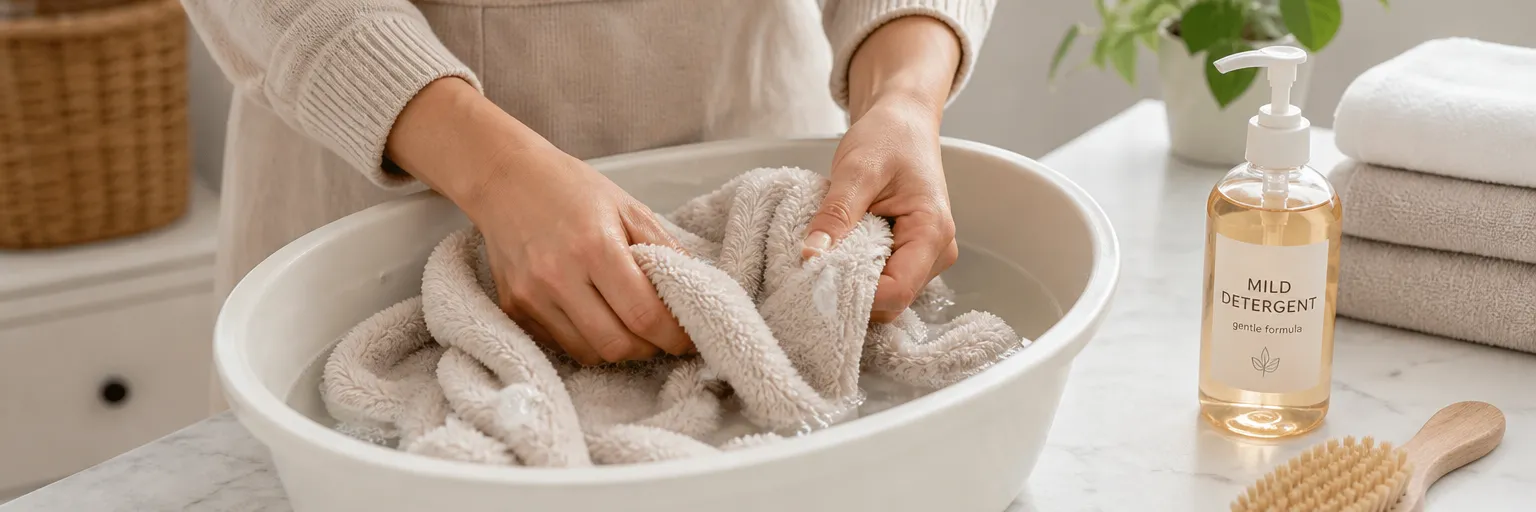
Can a bathrobe be cleaned by hand?
Yes, hand washing is entirely possible for a bathrobe, especially when it is delicate, bulky, or when you want to avoid an overly harsh machine wash. This method works well for sensitive fabrics and allows you to wash a bathrobe gently while limiting wear on the fibers.
When to choose this washing method
Hand cleaning is particularly suitable for a bathrobe made of delicate fabric, a decorated or embroidered model, or a garment whose label recommends hand washing. It can also be useful for a bathrobe that is not very dirty and simply needs freshening up after a few uses.
The steps to do it properly
Fill a basin or bathtub with lukewarm water, then add a small amount of mild detergent. Let the bathrobe soak for a few minutes before gently pressing it in the water, without rubbing it too hard or wringing it. Pay a little extra attention to the collar, belt, and cuffs, which are often more exposed to marks. Then rinse thoroughly until the water runs clear so you can properly clean a bathrobe without leaving any residue.
Precautions to follow
To preserve the shape and softness of the fabric, avoid water that is too hot, overly strong detergents, and harsh spinning or wringing. A terry cloth or cotton bathrobe can become rough if the detergent is not rinsed out properly. After washing, gently press it in a clean towel to remove excess water before letting it air dry. This method helps care for a bathrobe without damaging its texture or reducing its absorbency.
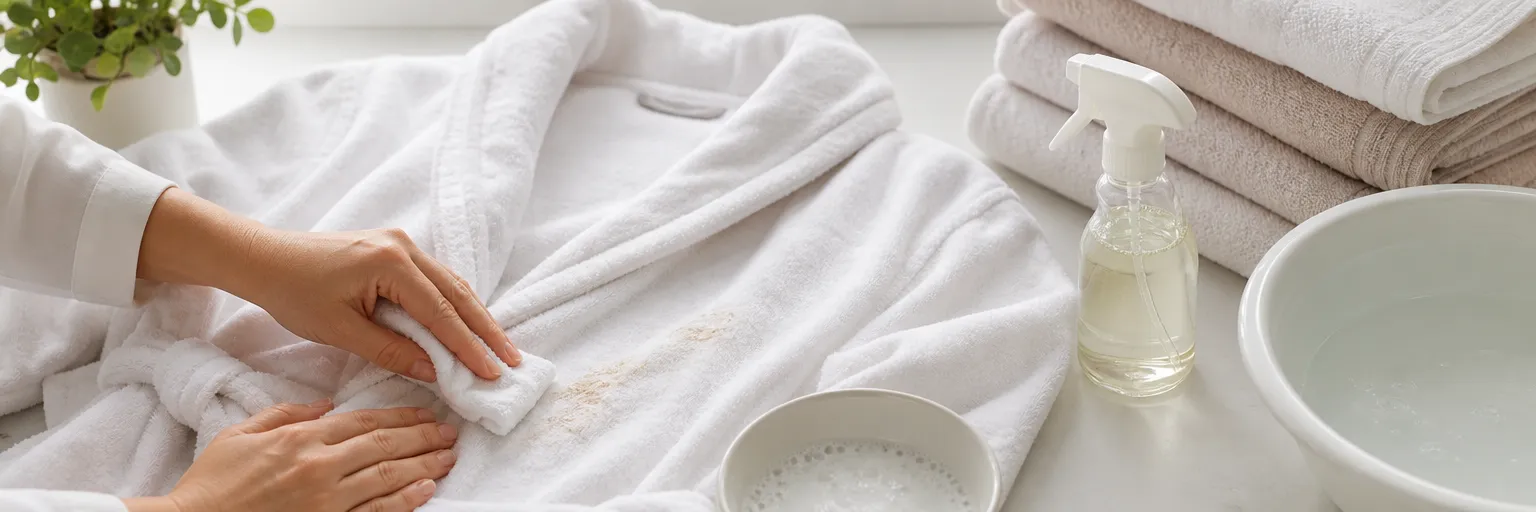
How to remove stains from a bathrobe?
When dealing with a fresh or set-in stain, the key is to act quickly without rubbing too hard so as not to wear out the fibers. Good stain removal always starts with identifying the stain, then testing discreetly on an inconspicuous area to avoid any discoloration of the bathrobe.
Treat the stain before washing
Before starting a full cycle, remove the excess with a clean cloth or paper towel. Then apply a little liquid detergent, mild soap, or a special stain remover to the affected area. Leave it on for a few minutes, then rinse with lukewarm or cold water depending on the type of stain. For a cotton or terry bathrobe, this step often helps prevent a mark from setting permanently during washing.
Adjust the method according to the type of stain
Greasy stains generally require an absorbent product or a degreasing soap. Makeup, cream, or oil marks come out more easily with localized pre-treatment before machine washing. For a drink, coffee, or tea stain, a quick rinse with cold water is often recommended. If in doubt, it is better to choose a gentle method to clean a bathrobe without altering its color or texture.
The right steps to avoid damaging the fabric
Avoid water that is too hot on an unknown stain, as it may set it. Do not mix several harsh household products, especially on a plush or delicate textile. Blot rather than rub, particularly on thick, looped, or synthetic materials. After pre-treatment, proceed with a wash that follows the care label to remove residue and restore a clean garment.
What to do if the stain won't come out?
If the mark is still visible after a first wash, repeat the treatment before any drying. Heat from the dryer can indeed permanently set certain stains. For effective care, it is best to check the bathrobe while it is still damp, then start again with a product suited to the fabric. In the case of delicate fabric or an old stain, professional cleaning may be the safest solution.
Should you use fabric softener to wash a bathrobe?
Fabric softener is not always a bathrobe’s best ally. While it can provide an immediate feeling of softness, it also leaves a film on the fibers, which can reduce absorbency, especially on a cotton or terry bathrobe. To wash a bathrobe effectively while preserving its comfort, it is therefore best to use it sparingly, or even avoid it depending on the material.
Why fabric softener can be a problem
On absorbent textiles, fabric softener coats the fibers and reduces their ability to absorb moisture. A bathrobe may then feel soft to the touch, but become less effective after a shower or bath. In the long term, using it too often can also weigh the fabric down, dull its appearance, and encourage residue buildup in both the laundry and the machine.
When you can use a little
A small amount may occasionally be suitable for certain very rough bathrobes, provided the care label is followed. This remains more appropriate for less absorbent materials than for thick terry fabrics. If you choose to use it, keep the quantity light so as not to compromise the result of washing the bathrobe.
The best alternatives for keeping a bathrobe soft
To keep a bathrobe soft without harming its absorbency, it is often better to rely on a gentle detergent, thorough rinsing, and suitable drying. White vinegar, used occasionally instead of fabric softener, can help soften the fibers and limit residue. Shaking the bathrobe after washing and then drying it properly also helps restore a fluffier feel without damaging the fabric.
The right approach depending on the material
A terry bathrobe generally does not handle fabric softener well, because it needs to stay absorbent. A fleece or microfiber model also requires caution, as these materials can lose some of their texture or properties if products are poorly dosed. To clean a bathrobe effectively over time, the safest approach is therefore to follow the label and reserve fabric softener for exceptional use.

How do you dry a bathrobe without damaging it?
Once washed, a bathrobe deserves just as much attention during drying as during washing. One wrong move can stiffen the fibers, distort the shape, or reduce absorbency, especially on cotton, terry, fleece, or microfiber models. The goal is to encourage even, complete, and gentle drying, without exposing the fabric to excessive heat.
The right steps as soon as it comes out of the wash
As soon as the cycle ends, it is best to remove the bathrobe from the drum quickly to prevent it from staying compressed and damp for too long. Shake it lightly to loosen the fibers, put the sleeves back in place, and reduce creasing. Avoid wringing it hard by hand, as this can weaken the seams and stretch certain areas of the garment.
For a thick bathrobe, the ideal option is to hang it on a wide hanger or lay it flat on a drying rack, depending on the fabric. A support that is too narrow can leave marks on the shoulders, while drying it in a heap slows down moisture evaporation.
Air drying: the safest method
Air drying is often the gentlest way to preserve the quality of the fabric. Place the bathrobe in a well-ventilated, dry area, and if possible, away from direct sunlight. Prolonged exposure to UV rays can fade colors and stiffen certain fibers.
If you use a drying rack, distribute the weight of the garment evenly to prevent it from losing its shape. Turning the bathrobe during drying can also help achieve a more even result, especially for thick fabrics that retain moisture inside for a long time.
Can you use a tumble dryer?
A tumble dryer may be suitable for some bathrobes, but only if the care label allows it. In that case, choose a low or moderate temperature. Excessive heat may shrink the fabric, flatten the looped fibers of terry cloth, or damage more delicate synthetic materials.
To keep it feeling soft, it is best not to extend the cycle unnecessarily. Remove the bathrobe as soon as it is dry or almost dry. For some cotton or terry cloth models, a short time in the tumble dryer can even help maintain softness, provided you use a gentle setting.
Adjust drying to the fabric
A cotton or terry cloth bathrobe generally handles natural drying well in a well-ventilated room, possibly with limited time in the tumble dryer. However, fleece and microfiber require more care: it is better to opt for gentle drying, away from direct heat sources such as a radiator, a stove, or very strong sunlight.
For delicate fabrics, patience is often the best option. Drying too quickly can affect softness, create static electricity, or make the fabric less pleasant to the touch.
Mistakes to avoid to preserve your bathrobe
Several habits can shorten the lifespan of a bathrobe: leaving it damp in the machine for too long, drying it on a scorching radiator, using a program that is too hot, or putting it away before it is completely dry. These mistakes encourage bad odors, fiber compression, and sometimes even the appearance of damp marks.
To dry a bathrobe without damaging it, the key is to focus on gentle care, good airflow, and a drying time suited to its thickness. This simple care routine helps keep the garment comfortable, absorbent, and pleasant to wear for longer.
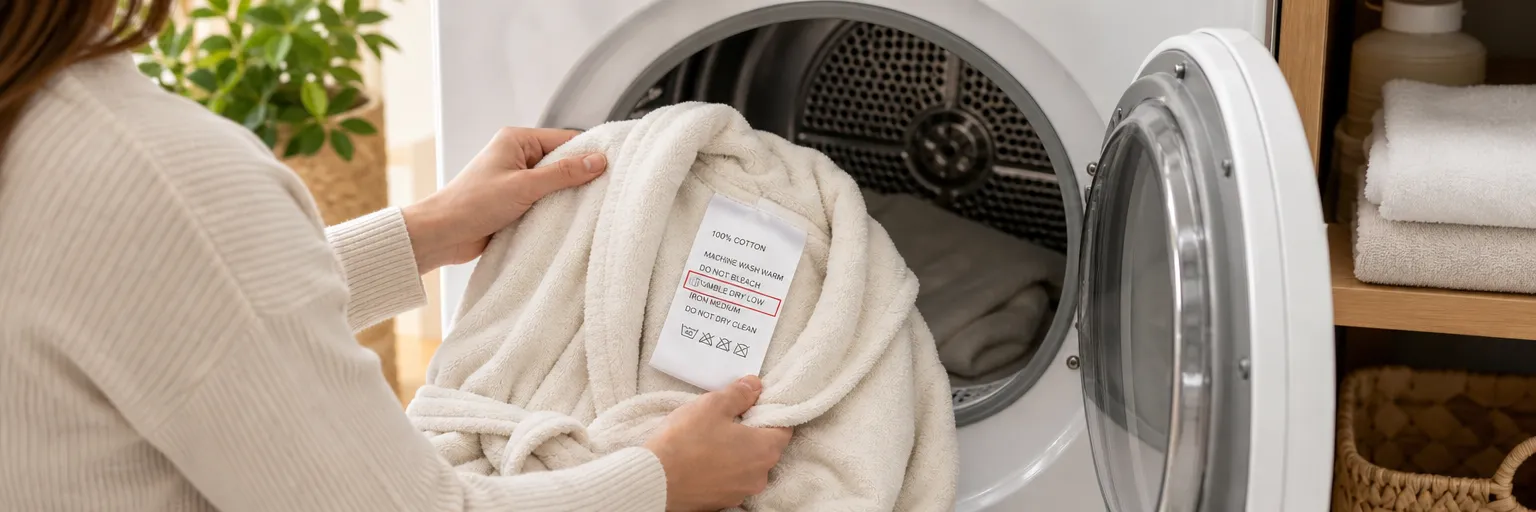
Can you put a bathrobe in the dryer?
Tumble drying is often possible, but it is not suitable for every bathrobe or every setting. A cotton or terry cloth model generally handles this type of drying better, as long as you choose a moderate heat setting. On the other hand, more delicate materials such as fleece, microfiber, or certain blended fabrics may lose their softness, shrink, or wear out more quickly.
Check the fabric and the care label
Before starting a cycle, rely on the care symbols. If the label allows tumble drying, it is best to choose a gentle program to limit wear on the fibers. This precaution is especially useful for washing a bathrobe and then drying it without affecting its loft, shape, or absorbency.
Choose a suitable program
Drying at too high a temperature can make the fabric feel rough, flatten the terry, or weaken the seams. To clean a bathrobe properly all the way through the process, choose a low or medium temperature, remove it as soon as it is dry, and avoid overly long cycles. This also helps preserve a pleasant feel and reduce creasing.
When to avoid the dryer
If the bathrobe is thick, delicate, decorative, or made from a sensitive synthetic material, air drying is often the safest option. Hang it on a sturdy hanger or lay it flat depending on its weight, in a well-ventilated area. This method takes more time, but it reduces the risk of shrinkage and extends the life of the garment.
The right habit for keeping a bathrobe soft
To keep a bathrobe plush, the ideal approach is to alternate between natural drying and occasional tumble drying, only if the fabric allows it. A short time in the dryer on low heat may be enough to soften the fibers, especially after washing a bathrobe properly. It is also best not to overload the machine so that air can circulate more freely around the fabric.

How do you keep a bathrobe plush after washing?
Keeping a bathrobe pleasant to slip on after every wash mainly comes down to a few simple habits: limit unnecessary products, avoid overheating, and take care with drying. When the fibers stay airy and are thoroughly rinsed, the fabric more easily retains its loft, suppleness, and everyday comfort.
Opt for a wash cycle that respects the fibers
A bathrobe stays softer when it is neither overwashed nor crushed in an overfilled drum. It is best to measure the detergent correctly, choose a moderate spin cycle, and avoid too much fabric softener, which can weigh down the fibers and reduce their absorbency. Effective rinsing also helps preserve a softer feel.
Take care with drying to preserve loft
Much of the softness depends on what happens after the wash. Shake the bathrobe as soon as the cycle ends to loosen the fibers, then let it dry in a well-ventilated place. If tumble drying is allowed, use a low to medium temperature so the fabric does not become stiff. Drying that is too hot or too long tends to make the bathrobe rougher over time.
Avoid mistakes that make the fabric rough
Several habits can make a bathrobe lose its softness: washing at too high a temperature, using too much detergent, leaving damp laundry in the machine for too long, or ironing a fabric that does not need it. To keep it looking thick and plush, it is also best to wash the bathrobe separately from garments with zippers, hooks, or abrasive materials.
Restore softness to a bathrobe that has become less supple
If the fabric seems flattened after several washes, washing it with a reduced amount of detergent and rinsing it thoroughly may be enough to improve the result. A brief tumble dry on low heat, when allowed by the care label, often helps fluff the fibers back up. With regular care, these precautions help keep a bathrobe plush, comfortable, and durable.

What mistakes should you avoid when cleaning a bathrobe?
Some bad habits are enough to make a bathrobe rough, less absorbent, or misshapen over time. To wash a bathrobe properly, it is best to avoid excess detergent, unsuitable temperatures, and overly harsh cycles, especially when the fabric is thick or delicate.
Choosing a temperature that is too high
Washing at too high a temperature can tighten the fibers, dull the colors, and speed up fabric wear. This mistake is common when trying to clean a bathrobe thoroughly, but it often has the opposite effect in the long run. It is better to respect the fabric and the care label instructions rather than systematically increasing the heat.
Using too much detergent or multiplying products
Using too much detergent does not help clean better. On the contrary, residues can remain in the fibers, weigh down the fabric, and reduce its absorbency. Repeated use of fabric softener, harsh stain removers, or fabric fragrances can also harm its natural softness. To wash a bathrobe in the washing machine, an appropriate dose and effective rinsing are generally enough.
Overloading the drum
A bathrobe needs space to be properly agitated and rinsed. If the drum is too full, washing becomes less even and the fabric may come out still damp, poorly rinsed, or wrinkled. This precaution is important if you want to care for a thick cotton or terry bathrobe without damaging it.
Using a program that is too harsh
Intensive cycles, spinning too fast, or repeated quick washes can weaken the seams and flatten the fibers. To wash a bathrobe so it stays soft and clean, it is best to choose a program suited to its fabric, with moderate spin speed. This is especially true for microfiber, fleece, or looped fabric models.
Neglecting drying
Poor drying can encourage musty odors, stiffen the fabric, or cause shrinkage in the tumble dryer. Leaving the bathrobe bunched up after washing or drying it at too high a temperature is among the most common mistakes. After trying to wash a bathrobe without damaging it, you should also make sure to dry it properly, either in the open air or with a gentle cycle if tumble drying is allowed.

How to care for a bathrobe to extend its lifespan?
Keeping a bathrobe in good condition over time depends less on intensive washing than on a regular, gentle care routine suited to its fabric. A few simple habits help preserve its shape, absorbency, and everyday comfort.
Reduce wear between washes
After each use, it is advisable to air out the bathrobe on a hanger or wide hook rather than leaving it bunched up in the bathroom. This precaution limits trapped moisture, odors, and premature fiber wear. A bathrobe that dries properly between uses stays more pleasant and often needs less frequent cleaning.
Adopting good laundry habits
To preserve the fabric over time, it is best to avoid excessively high temperatures, overly harsh cycles, and using too much detergent. Proper care helps wash a bathrobe without damaging the fibers or affecting its softness. It is also preferable to wash the garment with laundry of a similar texture to reduce excessive friction.
Taking care with drying and storage
Proper drying plays a major role in extending the lifespan of the textile. Ideally, the bathrobe should be air-dried in a well-ventilated area, or tumble-dried on low heat if the care label allows it. Once dry, store it in a clean, dry space without compressing it, to preserve its loft and prevent deep creases from forming.
Monitoring the overall condition of the fabric
Over time, certain signs show that bathrobe care needs to be adjusted: rough fabric, reduced absorbency, strained seams, or a lingering odor. In this case, it may be helpful to use fewer products, improve the drying process, or review how often it is washed. These small adjustments often help keep a bathrobe soft, clean, and comfortable for longer.

When should you replace a worn bathrobe?
Over time, even a well-maintained bathrobe eventually loses comfort, absorbency, and shape. Replacing it becomes worthwhile as soon as it no longer performs its function properly, remains rough despite proper care, or shows signs of wear that are too severe to be corrected.
The signs that show it has reached the end of its life
A bathrobe can be considered worn out when the fibers are flattened, the fabric becomes thinner in certain areas, the seams start to come undone, or the belt and loops become weakened. A lasting loss of softness, poor ability to dry the skin, odors that persist after washing, or an overall dull appearance are also clear indicators. If your bathrobe no longer regains its usual comfort, it is often time to consider replacing it.
When care is no longer enough
Some issues may be temporary, such as a rough feel caused by too much detergent or unsuitable drying. However, if several gentle washes no longer improve the texture, if stains remain deeply set, or if the garment repeatedly loses its shape, the wear is probably irreversible. Proper washing extends its lifespan, but it cannot restore broken or excessively damaged fibers.
Replacing it at the right time depending on use
How often you should replace it depends greatly on how it is used. A model worn every day after the shower will wear out faster than a spare bathrobe used occasionally. With intensive use, it is helpful to regularly check the condition of the fabric, especially for terry cloth or thick cotton models. If the worn bathrobe becomes less comfortable to wear, less hygienic, or less absorbent, it is better to replace it rather than keep using it.
What should you do with the old bathrobe?
Before throwing it away, check whether it can still be useful in another way. A bathrobe that is too worn out to be used as clothing can be turned into soft rags, household cleaning textiles, or spare fabric for DIY projects. If it is still in decent condition despite a few signs of wear, it can also be kept as a backup garment. This solution makes it possible to give a textile a second life before its final disposal.